 Writing in the local paper. Local Issues with a global take. I never translate literally and the editor trims at will to make it fit. Here's my version, then theirs, which can now be seen online (in Spanish) as well.
About Me

- Troy
- Troy Nahumko is an award-winning author based in Caceres, Spain. His recent work focuses on travels around the Mediterranean, from Tangier to Istanbul. As a writer and photographer he has contributed to newspapers and media such as Lonely Planet, The Boston Review, The Globe and Mail, The Sydney Morning Herald, The Toronto Star, Counterpunch,The Irish World, The Straits Times, The Calgary Herald, Khaleej Times, DW-World, Rabble and El Pais. He also writes a bi-weekly op-ed column 'Camino a Ítaca' for the Spanish newspaper HOY. His book, Stories Left in Stone, Trails and Traces in Cáceres, Spain is published by the University of Alberta Press.As an ESL materials writer he has worked with publishers such as Macmillan and CUP.
Showing posts with label Local Issues. Show all posts
Showing posts with label Local Issues. Show all posts
Wednesday, April 8, 2020
Not So Rear Window
Writing in the local paper. Local Issues with a global take. I never translate literally and the editor trims at will to make it fit. Here's my version, then theirs, which can now be seen online (in Spanish) as well.

Wednesday, February 19, 2020
Extremandalus

Writing in the local paper. Local Issues with a global take. I never translate literally and the editor trims at will to make it fit. Here's my version, then theirs, which can now be seen online (in Spanish) as well.
Tuesday, December 31, 2019
No Country for the Blind

Writing in the local paper. Local Issues with a global take. I never translate literally and the editor trims at will to make it fit. Here's my version, then theirs, which can now be seen online (in Spanish) as well.
Friday, December 6, 2019
All That Glitters...isn't Zara

Writing in the local paper. Local Issues with a global take. I never translate literally and the editor trims at will to make it fit. Here's my version, then theirs, which can now be seen online (in Spanish) as well.
Thursday, September 26, 2019
The Eighth Plague

Writing in the local paper. Local Issues with a global take. I never translate literally and the editor trims at will to make it fit. Here's my version, then theirs, which can now be seen online (in Spanish) as well.
Tuesday, September 10, 2019
Make Them Last

Writing in the local paper. Local Issues with a global take. I never translate literally and the editor trims at will to make it fit. Here's my version, then theirs, which can now be seen online (in Spanish) as well.
Friday, June 14, 2019
A Little Less Selfishness...please
Writing in the local paper. Local Issues with a global take. I never translate literally and the editor trims at will to make it fit. Here's my version, then theirs, which can now be seen online (in Spanish) as well.
Saturday, May 25, 2019
Good Drunks?
 Writing in the local paper. Local Issues with a global take. I never translate literally and the editor trims at will to make it fit. Here's my version, then theirs, which can now be seen online (in Spanish) as well.
Wednesday, April 24, 2019
Super George
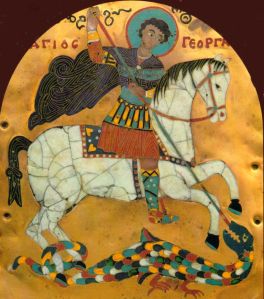
Writing in the local paper. Local Issues with a global take. I never translate literally and the editor trims at will to make it fit. Here's my version, then theirs, which can now be seen online as well.
Friday, March 29, 2019
Nothing To Envy
 Writing in the local paper. Local Issues with a global take. I never translate literally and the editor trims at will to make it fit. Here's my version, then theirs, which can now be seen online as well.
Wednesday, March 6, 2019
Filling Potholes with Empty Promises
 Writing in the local paper. Local Issues with a global take. I never translate literally and the editor trims at will to make it fit. Here's my version, then theirs, which can now be seen online as well.
We had just crossed the street when my youngest daughter looked up at me
and said, “Daddy, why is the whole city being fixed? Was it so broken before?”
I smiled to myself as I fondly thought back to the fact that she would have
just been learning to walk the last time the election repair cycle had taken
place. At five years of age, she had just had stumbled upon her first political
insight. A realization that, long before the smiling yet anodyne faces of
candidates adorn the lampposts and the official political campaigns begin,
roads begin to get torn up in a clumsy attempt to remind the electorate that
those in charge are in fact getting things done. A political maneuver that is
definitely not case specific to Caceres, nor even Spain. I’ve seen this crude
sleight of hand the world over, but it is a phenomena that seems particular acute
here due to the strong association that Spaniards seem to hold between roads
and progress. In the months and weeks leading up to the elections, political
agendas brim with openings, rushed inaugurations and the plaques that accompany
these ceremonies and it’s precisely the wording on these dedications that pique
my curiosity. The words ‘excelentisimo’
and ‘ilustisima’ may seem normal to
Spanish speakers but to someone new to the language like me, they have always
struck me as somewhat noble sounding. I’m certainly no Spanish major, but these
routine protocol formulae appear to me as though they are titles bestowed onto
someone born into a royal bloodline rather than someone who has been elected into
public office by their fellow citizens. I’ve lived here long enough to know
that the black legend of a supposedly anti-democratic Spain, propagated by
those like the Catalan separatists, couldn’t be further from the truth, but
words have power and often betray perspectives. In a country that doesn’t allow
for open electoral lists and abhors the liberty to vote against the Party, I
wonder if indeed there is some truth to my hunch. From the mouths of babes come
damning truths and there are deeper things that need addressing than patching up
patches.
Saturday, February 23, 2019
Before We're Uberized
 Writing in the local paper. Local Issues with a global take. I never translate literally and the editor trims at will to make it fit. Here's my version, then theirs.
I have a soft spot for the
Spanish postal system. Back at the turn of the millennium my mother and I
decided to walk the Camino Santiago...in January.
By the time we finally got
started the weather was fine enough but what did become painfully clear after our
first day’s walk was that there was absolutely no way my mom was going to make it with the
mobile home that she was carrying on her back.
The next morning she hobbled
into a post office and mailed the backpack to herself in Santiago where it
awaited us after our pilgrimage. It all seemed so efficient and I have carried
that impression with me ever since. In fact, one of the first places I remember
seeing a numbered waiting line here in Spain was at the post office.
Before
these magic machines were introduced, I had always suffered trying to figure
out whose turn it really was or worse, explaining in my rudimentary Spanish to elderly women
in the fish shop that I had been waiting much longer than they had. So imagine
my surprise when I walked into the post office the other day and asked for a
book of stamps and was met by a surprised look.
I had already been to two or
three tobacco shops where I was told they no longer sold them, so I thought I
would go directly to the source. It’s not that they don’t sell stamps at the
post office, it’s just that it isn’t very common anymore and the teller wasn’t
even sure where they were kept anymore. Fifteen minutes later, after a thorough
search, I had my stamps in my hand but the entire episode made me think of how
quickly things can change.
It wasn’t so long ago that those magical stickers were
the only way to share news with far away friends whereas now, ideas are shared faster
than it takes to drop a letter into a postbox. Taxis aren’t the only ones
facing extinction in the uberization of society but until letters disappear
completely, I’ll keep believing in the magic of the mail.
Tuesday, January 15, 2019
Ideas on Empty
Writing in the local paper. Local Issues with a global take. I never translate literally and the editor trims at will to make it fit. Here's my version, then theirs.
 What color is an idea? It
might sound like a strange question but in today’s hyper-polarized world, one
that needs to be asked. Are ideas blue? Do they suddenly appear and reflect the
pure, clean sky above us? Are they maybe more red, filled with the blood and
energy that courses through all of our veins? Or are they maybe newer colors
like orange, bright as the fruit hanging off of the trees in winter or perhaps
a bit darker and more difficult to define, like the reflection of the clouds as
the sun sets during the same season? How about purple, like that wine stain
that stubbornly refuses to come out in the wash? Or even an unlikely green, lush,
brief and violent as the dehesa that surrounds us when a little rain falls here
in our beautiful yet forgotten Extremadura? It seems to me that if indeed ideas
are made up of colors, they would be a mix of shades rather than one solid hue. If indeed
ideas were colored, they would be a blend of the different shades that reflect
the different influences behind them rather than some sort of pure, single thought.
So why is it that we, for some reason, attribute ideas to political currents
rather than to the people who actually come up with them? Of course it’s
impossible to completely excise someone’s political beliefs from the ideas that
may occur to them but, especially at the local level, ideas should be judged on
their content and how they would make our city a better place to live rather
than the color behind some political ideology. Would a brilliant idea that brings
much needed investment and employment to our region only be blue? Or would an
ambitious plan to energize our youth only be red? To paraphrase the great Duke
Ellington when asked about the kinds of music he liked, to me there are only two
types of ideas: good and bad. To which I’d add those that can be bettered. I’m
not sure if ideas in fact are made up of colors but I do know what a city and a
candidate for mayor without them will look like and that’s a dark, scary place
indeed.
Wednesday, December 19, 2018
Reluctant Prophets
 Writing in the local paper. Local Issues with a global take. I never translate literally and the editor trims at will to make it fit. Here's my version, then theirs.
I’m starting to hear
voices. Not the scary ones that tell you to do naughty things nor those deep and
ominous tones informing you that you’ve become the new prophet of a new
religion, but familiar ones, in English, as I walk through the streets of the
city. Voices that I’ve heard my entire life around about this time of year. There’s
Frank Sinatra reminding me that Christmas probably won’t be white here and next
is Mariah Carey somewhat ironically rallying against consumerism with her
amazing range all the way from the Plaza Mayor up to Canovas. I walk past a
robot Santa who wishes me ‘Merry Christmas’ in perfect English and I see pictures of his reindeer
in shop windows; it’s definitely navidad. It comes at a time when more and more
voices can be heard blaming immigration for the problems the country faces. Angry
voices claiming that imported customs are destroying the fabric of traditional
Spain and replacing things deeply ingrained in the cultural DNA of the land. I
then hear a song about fish drinking in a river and see images representing the three kings of the orient that had traveled so far in search of a refugee child
born in a manger in far off (and obviously not Spanish) Bethlehem. The mix of the different songs and images reminds me that change and the crossbreeding of traditions is inevitable,
like it or not. Once upon a time Christmas carols in America were solely
religious but as society became more varied, a need arose for songs that
celebrated the season but were not necessarily religious and some great music
was created. Christmas trees started off as pagan symbols and now Cacereños
flock to the Plaza Mayor every weekend to take selfies in front of the metallictree-cone. Adopting and adapting is how I will be spending Christmas, enjoying
some jamon iberico, wine from la ribera del Guadiana, some English cheese with
a drop or three of irish whiskey by the fire while reading a Portuguese author and of
course listening to Frank remind me of the snow that I’m certainly not missing.
Thursday, November 22, 2018
Medieval Kebabs
 Writing in the local paper. Local Issues with a global take. I never translate literally and the editor trims at will to make it fit. Here's my version, then theirs.
Walking
up the hill from my house and towards the Plaza del Socorro, the smell first
hits me. It’s not unpleasant but certainly misplaced. An odor that I definitely wouldn’t
expect as I walk to work and it takes me a moment to realize exactly what it
is.
I walk under the large tree in the square and realize that what I’m
smelling are...donkeys and then I remember, it’s once again the time of year for the "medieval" market in Caceres.
A smell that, if you forgive the monstrosity of the prison-like looking Archive
to my left, wouldn’t be so out of place among these definitively medieval
surroundings.
As a stranger from a country where history was unwritten before
the arrival of the Europeans, I always find it curious that once a year so much
effort is made to make these streets appear even more…medieval. Renaissance
jewels fronted by artisanal kebabs, medieval pizzas and knightly potatoes just
don’t seem to jive, no matter how rustic the font used in their signs is. The hand-cranked rides in the Main Square do seem to fit in with the intended atmosphere
but the plastic junk from China sold in the stall next to them makes the entire
exercise seem a bit forced. But if indeed such jarring contrasts are what they
are looking for, why not go a step further?
How about inviting an upstart IT
company to test its 5G along the cobblestone streets and in the process
hopefully leave behind fibre optic cables for those us who live behind these walls?
What about funding a contest to find ways to make the Arabic tiles, shielding so many building around the country, produce solar energy? Or apps that can
scan a building and take the visitor on a virtual tour of what it might have
actually looked like some 500 years ago.
If nothing distinguishes our fair from all
the the others that are tented up around Spain and Portugal, rather being a
real, interesting attraction that attracts tourists, it ends up being just another place to eat overpriced kebabs, not
matter how medieval they are.
Friday, October 26, 2018
Oh, He's Just Playing...
 |
| Daily Garden Gnome left by my neighbors |
Writing in the local paper. Local Issues with a global take. I never translate literally and the editor trims at will to make it fit. Here's my version, then theirs.
I must have missed the
email. Or perhaps the message came via SMS, like the ones Donald can now send
out in case of national emergencies and it somehow got lost. I guess it could
have been an old fashioned letter but whatever the case is, I didn’t get it. As
a result I missed the decree and I am now the only person left in town without
a dog. While this may seem an easy enough cross to bear, not owning a dog does
come with its inconveniences. Just the other day while attending some Blues festival concerts in el Corral de las
Ciguenas and later in Santa Maria, I wasn’t able to fully participate in the
shows as those who had brought their dogs could. Without a dog, I couldn’t add to
the barking and howling of those around me and I have to admit that I felt a
little left out. Then the other day as I sat in a terrace having a caña (wee
beer), I think that my relative silence must have annoyed those around me. Just
next to me, four, respectable looking middle-aged people sat, talking somewhat
loudly as they struggled to hear each other over the constant, sharp barking of
the dog that was impatiently wailing from beneath the table. Their impassive
faces, as if they didn’t even notice the urgent barking, was surely some sort
of signal to me of their disapproval of my doglessness. This sentiment must
have also been shared by the three or four other tables with dogs who also joined
in with the little terrier under the table. But perhaps my biggest regret is
that I can’t repay my neighbors and visitors to the old town who leave little
presents every day for me in my street, taking the extra time to liven up my
door with some eau de toilette from their little Rover. I’m not sure if my
dogless state will result in an infraction or fine, but in a city where they
say there are now more dogs than children under five, I hope my own kids don’t
scare your animals because, while they may seem ferocious, “they only want to
play” and will hopefully help pay your pension in the future.
Wednesday, October 3, 2018
Hibernating Bears and Music Festivals
Writing in the local paper. Local Issues with a global take. I never translate literally and the editor trims at will to make it fit. Here's my version, then theirs.
While it seems that summer doesn’t quite want to let go, it’s that time of year again. The time of year when the croaking of storks, ringing of church bells and clanking of processions are replaced by sounds that are normally heard on the banks of the Liffey, Tajo or Mississippi. Autumn in Caceres means music. A time of year when every other weekend the old town fills up with thousands of people taking advantage of the somewhat cooler evenings in order to enjoy the sounds of eclectic Pop, Irish music, Jazz and Blues in the open air. The normally quiet UNESCO core comes alive with this exchange of cultures from around the world and the more intimate nature of these concerts allows for more relaxed viewing than when the masses invade the city in spring during WOMAD. Children dance and get up close to the band in the calle Moret during the welcoming street party for the Blues festival, amazed that three or four people can get together and create so much fun. The steps in the Plaza Mayor become an impromptu stage as the Irish Fleadh says goodbye for another year and the city vibrates with the positive feelings ringing behind long after the stages have been packed up for another year. But as autumn turns to winter, the nights get longer, the weather becomes less inviting and the clanging of the bells once again becomes the old town’s primary soundtrack, what happens to the music? Unlike the storks that come once a year or the penitents taking the saints out for an airing in spring, music stays with us year around, sliding from the city’s squares indoors to the intimate places where music is born. Every weekend, live music pulses inside one of these rhythm temples, keeping alive through the darker months of winter those beats that give so much life to the city. But if the throngs that danced and laughed in Santa Maria don’t come out to hear it? Unlike the bears of my homeland, music, the musicians that play it and the brave souls that promote it can’t hibernate and without the support of music lovers throughout the year…well it might not make it through the long winter.
While it seems that summer doesn’t quite want to let go, it’s that time of year again. The time of year when the croaking of storks, ringing of church bells and clanking of processions are replaced by sounds that are normally heard on the banks of the Liffey, Tajo or Mississippi. Autumn in Caceres means music. A time of year when every other weekend the old town fills up with thousands of people taking advantage of the somewhat cooler evenings in order to enjoy the sounds of eclectic Pop, Irish music, Jazz and Blues in the open air. The normally quiet UNESCO core comes alive with this exchange of cultures from around the world and the more intimate nature of these concerts allows for more relaxed viewing than when the masses invade the city in spring during WOMAD. Children dance and get up close to the band in the calle Moret during the welcoming street party for the Blues festival, amazed that three or four people can get together and create so much fun. The steps in the Plaza Mayor become an impromptu stage as the Irish Fleadh says goodbye for another year and the city vibrates with the positive feelings ringing behind long after the stages have been packed up for another year. But as autumn turns to winter, the nights get longer, the weather becomes less inviting and the clanging of the bells once again becomes the old town’s primary soundtrack, what happens to the music? Unlike the storks that come once a year or the penitents taking the saints out for an airing in spring, music stays with us year around, sliding from the city’s squares indoors to the intimate places where music is born. Every weekend, live music pulses inside one of these rhythm temples, keeping alive through the darker months of winter those beats that give so much life to the city. But if the throngs that danced and laughed in Santa Maria don’t come out to hear it? Unlike the bears of my homeland, music, the musicians that play it and the brave souls that promote it can’t hibernate and without the support of music lovers throughout the year…well it might not make it through the long winter.
Tuesday, July 3, 2018
Medieval Tests
Writing in the local paper. Local Issues with a global take. I never translate literally and the editor trims at will to make it fit. Here's my version, then theirs.
 After having lived here for more than a decade, I still catch myself looking up in wonder as the last rays of the setting sun hit the Torre de la Yerba in the Plaza. The layers of history present as I walk under the Arco de la Estrella send my imagination reeling only to suddenly be brought back to the present when I see groups of tourists taking selfies under it. That mix of tradition, history and modernity, that ability to meld the past with the present is one of this region’s biggest resources. What I can’t understand though is when some things remain firmly mired in the past, frozen in time like the face of the Amazona that cries out from the facade of the Obispado.
These past weeks, thousands of brave opositores have been struggling through an exam process that perfectly fits in with the 16th century palaces that populate our old town. A medieval system that selects the teachers that will then guide our youth through this new age. I can easily envision a table of cloaked monks sitting in Santa Maria while opositores recite what they have memorized without having to internalize nor analyze the content, just as today’s opositores are asked to do. It’s a system so deeply engrained in Spanish culture that it’s the one issue that is never questioned when the prickly topic of bettering the Spanish education system arises. A curriculum more innovative than those of Finland or Canada could be developed, where investigation and project based learning are the pilars but if the very teachers are still koranically memorizing enormous quantities of what will amount to be useless information in order to get the job, what can be expected of them when they actually reach the classroom? The cognitive dissonance between how they are chosen and how teaching is in this new century is a gulf too wide to bridge.
The past and knowledge of it is important but what is crucial is to know when it is time to move on and adopt new ways of thinking before we truly get left behind. It’s like those warts stuck to the Almohad wall that I see as I walk towards the old town, if they have to go, they have to go.
Wednesday, May 16, 2018
WOMAD or WOPAP?
 |
| video Jorge Rey |
I’ve been fortunate enough to play at some of the most famous festivals around the world. From Vancouver to New York, I have seen the stage from the other side and even returned on a few occasions and have been able to appreciate the transformative effect these festivals can have on cities. It would be difficult to image New Orleans without Jazzfest or Chicago without the Blues festival, popular festivals that have become so intertwined with the lives of the cities that it would be impossible to think of one without the other. The music may only last a week but its echo reverberates year round. Could the same be said of WOMAD? True, the festival has brought Caceres to the attention of some around the world but my question is what has it brought back to Caceres in return? Where are the partnerships and initiatives with local associations and startups? After twenty seven years, more than a generation, you would think that some sort of musical partnership would have been formed with an institution like the conservatory to investigate the links between Extremaduran folk music and the rest of the Mediterranean. Or a dance program that explored dances from around the world. How about workshops in schools throughout the year to confront racism? Or instead of complaining every year, how about a plan with the science department of the University to tackle the enormous amounts of garbage and human waste that the festival generates? But no, the English are smart. For centuries they have been selling their brand to lands beyond their isle, reaping the benefits from their colonies and leaving little in return (except their monarchy on occaion). It’s time to ask for something in return. Ghandi, who would have appreciated the original ethos of the festival, once said that the difference between what we do and what we are capable of doing would suffice to solve most of the world’s problems, and here we’re talking about a local scale. The M in WOMAD for music and D for dance should ring throughout the year or if not, the name should be changed to WOPAP. A World Of Plastic And Piss.
Saturday, April 21, 2018
A Master Doesn't Necessarily Make you a Master
Writing in the local paper. Local Issues with a global take. I never translate literally and the editor trims at will to make it fit. Here's my version, then theirs.
One of the first questions
I ask my students when I start a new course is often one of the most difficult
for them to answer. And no, it’s not like a former boss of mine once told me, “The
first day of class I look for the most difficult grammar point and then really
let them have it.” No, my first question is much more straightforward, yet
perhaps even more challenging to answer...that is if the student is being honest
with me and more importantly, with themselves. Quite simply I ask them,
“Why are you here?” Some go into automatic mode and reply like robots, “because
English is very important for my future.” Others with perhaps a bit more experience koranically recite, “because I need it to communicate with clients from abroad.” Then
there are those who are brutally sincere and say point blank, “I need the piece of
paper.” Not exactly a great start from a learning standpoint but at least they are being honest
with me and with themselves. As an educator it pains me to hear this but I completely understand. In a culture that demands paper rather than ability, my class
is simply a necessary step (or obstacle) in order to obtain that indispensable piece of paper. For
the civil servant position that the student is chasing, they won’t be asked if
they can in fact use the language and convert their knowledge into usable
skills, what matters is if the numbers in their file tally up more than the next. Rather
than checking what they can do, if they are actually good teachers. tourist guides or
project managers, if the numbers on the paper add up to more than what the next
candidate has, they get the job. Where I come from, your qualifications are
important, and of course not falsifying them, but what employers really want to know is what you do for them and their
business. You might have a Master from Harvard but what have you done with that
knowledge? How have you translated it into a workable skill? Until this focus shifts, cases like
the disgraceful Cifuentes Master (among countless others) will continue to remind that this archaic method of measuring ability is just that, archaic. It all brings me back to my ex-boss who never could quite figure out why the students from the States
never came back and I’m pretty sure she had more than a few Masters.
Subscribe to:
Posts (Atom)

-
 This plaque on the church is about the only evidence you'll find of Battuta's visit in the town o...
-
 Yesterday I walked up the hill leading to my polling station under a clear blue sky, a color I would later realize that had foreshadowed th...