About Me

My photo
Troy Nahumko is an award-winning author based in Caceres, Spain. His recent work focuses on travels around the Mediterranean, from Tangier to Istanbul. As a writer and photographer he has contributed to newspapers and media such as Lonely Planet, The Boston Review, The Globe and Mail, The Sydney Morning Herald, The Toronto Star, Counterpunch,The Irish World, The Straits Times, The Calgary Herald, Khaleej Times, DW-World, Rabble and El Pais. He also writes a bi-weekly op-ed column 'Camino a Ítaca' for the Spanish newspaper HOY. His book, Stories Left in Stone, Trails and Traces in Cáceres, Spain is published by the University of Alberta Press.As an ESL materials writer he has worked with publishers such as Macmillan and CUP.
Showing posts with label Caceres. Show all posts

Saturday, May 17, 2025

Half a Million Reasons


The Camino a Ítaca is in no way linear, it circles and loops and starts all over again. As spring turns Cáceres into the allergy sufferers nightmare, another event takes places, one that has been going on for more than thirty years. It's quasi-religious in the way that in some sectors it can't be questioned for fear of dispelling the myth that they seem to think we don't deserve. It's no longer the World of Plastic and Piss that I once wrote about, but the colonial tinge remains. The brand still takes the piss and gives nothing in return. Click over to read the original piece in Spanish in the HOY or read the English translation below. (PDF en castellano abajo)

This wasn’t your typical, “Is everyone feeling alright? Let me hear you say, yeah!” It was more a plea than a rousing chant. Halfway through her set it sounded less like a chant than a last-ditch appeal to connect with the swelling crowd. She shaded her eyes against the late-afternoon Thursday sun, spun on her heel, artfully flicked the fringe of her dress and shouted, “I love the landscapes of this region, vamos Extremadura!”

Silence? No—its opposite.

Her heartfelt appeal was met with heroic indifference in the form of an incessant drone of humanity. Her words vanished into an insectile hum—cicadas fed through a distortion pedal and Marshall stack. She had hauled her art up from Andalucía only to meet a giant, collective mute button.

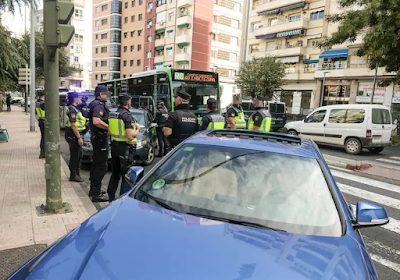
This was lip syncing in reverse. The performers were trying to sing, making every effort possible to connect with the audience. The band nailed every note, but the PA returned nothing except a muffled sludge—felt in the gut, unintelligible in the brain. The stage became a rolling Instagram backdrop for the considerable number of people who, despite the ban on the botellon, still seemed to think the stage was simply some sort of elaborate photocall for their corrillo selfies. Any hope of a real cultural exchange fell from the sky like strangled doves, the notes dying before they cleared the first row of concert-goers.  

Thursday’s sonic fiasco was merely prologue. On Friday evening, after a cursory sound-check during the break, the band struck up to welcome Africa’s premier diva, five-time Grammy-winning Angélique Kidjo. Draped in vivid African print, she strode to centre stage, leaned back, and loosed that titanic voice—only for the impotent mix to shrink it to a whisper. It was a Zoom call out of sync: her mouth moved, but neither the lyrics, the snare, the percussion, nor keyboards survived the journey across the plaza.

Those who cared about the music faced a no-win choice: wander the plaza in search of a sonic sweet spot that never materialised, or stand rooted in front of the stage, forced to watch Angélique Kidjo endure the slow humiliation of being reduced to lip-reading practice as her roar arrived as a rumour.

“WOMAD isn’t what it was,” you hear. How could it be? Thomas Wolfe was right: the road back home is closed for renovation. Thirty odd years have rewritten Cáceres and its people. The provincialism that was once turned on its head is now resigned. The franchises and outside world have moved in. The festival itself has been outsourced in layers, until all that remains of Gabriel’s founding vision is a logo rented by the hour.

The festival’s supporters cling to the brand like a VIP wristband—never mind that the bar ran dry years ago, terrified that any criticism might cancel Cáceres’ only mass gathering not dedicated to the celebration of death, be they prophets, virgins or bulls. If WOMAD really preaches tolerance and respect, it should start at the mixing desk and give the artists the basic courtesy of being heard.

If WOMAD can’t or worse, won’t fix the faders, perhaps it’s time to stop renting nostalgia and look beyond the franchise.

Friday, October 18, 2024

Stories Left in Stone Deep Dive Chapter 16


In the first of the #StonesDeepDive series, an indepth look into Chapter 16, Stone Cartoons from Stories Left in Stone, Trails and Traces in Cáceres, Spain published by the University of Alberta Press. This part of the adventure takes place in Monfragüe National Park and the Sistine Chapel of prehistoric rock art in the region. Click over to have a look.

Saturday, October 12, 2024

The Virgin of Lithium


Celestial interventions in this week's Camino a Ítaca. And Virgins? Did I forget to mention Virgins? Click over to read the originally published piece in Spanish in the HOY or read the English translation below. (PDF en castellano abajo)

For the past few weeks the local papers in Cáceres have taken on a distinctly retro look, seeming more like throwbacks to the days when entire society page sections took up large portions of the ink printed. It’s as though the city was being visited by a foreign head of state or some extremely popular movie star and the media can’t get enough.

Pages and pages have been dedicated to her itinerary, who she was greeted by and even down to the last detail of what she was wearing and where she had acquired it. The ongoing genocide in Gaza (and now Lebanon) and Pedro Sanchez’s capitulation to thefugitive who has been living large in Waterloo, paid for by the Spanishtaxpayer have been pushed to the side by this, in some of the articles’ fawning words, momentous event.

One of the interesting aspects of all of this media attention, especially for an outside observer like myself, is that all of this hype and dedication has not been devoted to someone like Kamala Harris, Rosalia, Taylor Swift or even Queen Leticia and how she spends your hard-earned tax Euros on new outfits and shoes. All of this media hysteria has been given over to what is in effect an inanimate object.

Call it an icon, a totem, a figurine, a fetish or graven image but the extent of this fawning has been so great that I have even had to check twice when picking up a copy of the other newspaper in the region to make sure that I hadn’t picked up by mistake a parish magazine that someone coming from mass had left behind.

But the apparent frenzy that the centenary of the Virgin of the Mountain has sparked only scratches the surface of the debate that is really fermenting in the city. A closer look at the comments in articles and town hall posts, beyond those claiming that this statue represents all Cacereños or those rightfully questioning why article 16 of the Spanish constitution seems to have become a mere suggestion rather than law, shows that an entirely different polemic is happening.

It’s not a debate about Leviticus’ exhortation not to pray to idols or whether a sectarian religious figure should be feted by the local government and bestowed with the title of honorary Mayor, but rather a referendum on one of the most crucial challenges facing the future of the city: the lithium mine.

It seems that the faithful want to know where she stands on this issue, with many scandalized that this could even be conceived so close to her sanctuary.

The former mayor had his Pauline conversion after a mysterious occurrence when he did a complete about-face on his stance on the mine and as a result lost the election. While the current mayor twists himself into knots trying not to pronounce one way or the other on the matter until he too gets that same phone call, if he hasn’t already.

The question is if all of these prayers will convince the Virgin to intercede on the faithful’s behalf? And then perhaps more pertinently, what happens when she doesn’t?


Saturday, September 28, 2024

Number No Longer in Service


This week's Camino a Ítaca asks whatever happened to good 'ol fashioned miracles? It seems that the dead no longer walk and the seas no longer part. But hell, that doesn't stop people from asking. All this and more is explored in my soon-to-be-published book. Stories Left in Stone. Trails and Traces in Cáceres, Spain. Click over to read the originally published piece in Spanish in the HOY or read the English translation below. (PDF en castellano abajo)

What ever happened to good old-fashioned miracles? Those shock and awe events that convinced the otherwise cynical to put aside their previous beliefs and embrace a new faith. And by this I don’t necessarily mean the kind that are written about on papyrus and which create religious dogma, like Palestinians walking on water, bearded men driving motorways through the Red Sea, raising the dead or even talking donkeys (Numbers 22:21-39). I suppose that these feats use up a lot of spiritual energy and can only happen every other millennia or so.

I was thinking more along the lines of more recent wonders. Like those mysterious women who appear to young girls in the countryside surrounding places like Fatima and Lourdes. Are children too engrossed in their screens to notice gossamer floating ladies anymore or are they too protected to allow strange apparitions to approach them? Or maybe it’s the socialists who are to blame for their absence. After all, these kinds of miracles always seemed to appear to the humble and illiterate. Perhaps the steady increase of standards of living and near complete literacy rate have something to do with the recent dearth of levitating maidens in grottos.

Then there are the Virgins that once lay hidden in the fields, forests and mountains across the land. Why haven’t any of them appeared to shepherds and the like in the past 500 years? I recently wrote a travel book on the province of Caceres that is coming out on Tuesday that explores these mysteries and asks some of these questions. Have they all been discovered? Will there be no more supernatural events like Gil Cordero’s sacred cow? And if they do appear, would the church be able to useAznar’s law and register the surrounding land as their own without any need ofland deeds or even proof?

All this makes you wonder, is the Christian God still in the miracle business? Or is he busy ensuring that millstones get hung around the necks of pedophile priests before drowning then in the depths of the sea?

One thing is for sure, it is not for the lack of the faithful trying to get the big guy in the sky’s attention. Here in Spain the calendar year is jam packed with Virgins getting carried around the country. From an outsider’s perspective, these Marianist images seem to serve as local telephone operators for the faithful with a direct line to a more distant divine. Interlocuters that intercede and relay people’s prayers to God. They act as perceptible go-betweens with the Almighty while providing a convenient out when prayers aren’t answered.

Here in Caceres, the local Virgin and 'honorary mayor' is being paraded around town to celebrate its centenary of canonical coronation and you can imagine they prayers being asked. I imagine big prayers like peace in the Middle East are directed straight to the Big Man while more local affairs are left to the Virgin. Perhaps a stop to the carcinogenic mine? Decent rail service? A government that seriously invests in public health so that ‘miracle’ cure prayers can be answered?

Whatever the case, *I just came here to talk about my book.

*a phrase that became famous in Spain when a well known writer got terribly angry on a TV program and said this.


Saturday, July 20, 2024

Ode to Reason


This week's Camino a Ítaca asks if such a thing exists as fascist children's literature. A few trolls came out their lairs and found me on this piece. Their comments are hallucinatory, if a bit frightening. Click over to read the originally published piece in Spanish in the HOY or read the English translation below. (PDF en castellano abajo)

Do fascists read? And if they do, do they read things like poetry? They more than likely reread speeches by Hitler, Mussolini and our local Gallego contingent but do they venture much further? We all know they have a particular penchant for banning books and even organizing barbeques over them on special occasions. Worse yet, they even have an unfortunate history of murdering those who write them and dumping them in mass graves. But do they actually read them?

We know that they certainly don’t like many poets. Just after the civil war ended a fascist triumphant wrote about some of Spain’s greatest poets in the ABC, “Alberti, Cernuda, Miguel Hernández, Altolaguirre, en el verso, son los tristes Homeros de una Ilíada de derrotas. Porque sólo fulge el soneto como un diamante cuando lo talla una espada victoriosa...son unos poemas de laboratorio, sin fuerza ni hermosura, equívocos, cobardes y llorones.”

("Alberti, Cernuda, Miguel Hernández, Altolaguirre, in verse, are the sad Homers of an Iliad of defeats. Because the sonnet only shines like a diamond when it is cut by a victorious sword...they are laboratory poems, without strength or beauty, equivocal, cowardly and weeping.")

So if they do read, the question is what do they read? What kind of stories do they read to their children? Are their children’s books about typical things like sharing, helping others and learning to work within a community or are they more about feeding the weakest members of society to the wicked witch and then selling their repossessed homes to international vulture investment funds?

They do tout their Christianity often, so perhaps the bible is high up on their reading list. But if you look closely at their rhetoric, it has a much more Old Testament vibe to it, more about supporting genocides and persecuting the ‘other’, than the Sermon on the Mount.

So how do they express themselves culturally?

We know that they have a particular penchant for jingoistic, Wagnerian marches, awkwardly goosestepping through squares, forming pogroms, organizing masses in front of Ferraz and villainizing MENAs, but other than that, what are their cultural representations beyond nazi salutes and mass executions?

In Caceres it seems that they have a thing against the renowned poet and children’s literature writer, Gloria Fuertes. Gone are the days of lining writers they don’t like against walls, shooting them and dumping them in unmarked graves, so now they have resorted to different measures.

The far right have taken orders from Madrid and decided to make things uncomfortable for the PP beyond the regional level and have moved their battle to the town halls where they have influence. In Caceres they have presented a motion to change the name of a central children’s playground from Gloria Fuertes to a curious substitute.

Rather than choosing Primode Rivera or any other of the leaders from their fascist pantheon, they have proposed naming if after the princess Leanor, the granddaughter of the man who ultimately betrayed them and went against the caudillo’s wishes and transitioned Spain from being a fascist theocracy to a modern European constitutional monarchy.

In doing so they once again prove that they have absolutely no recipes for bettering the lives of the citizens of the country they claim to love so dearly. All the while wasting the time and energy of the government on matters that might resound with a small portion of their electorate but in the end matter nothing to the general public.


Saturday, April 27, 2024

Saint George in Rafah


In this week's Camino a Ítaca, a rebranding of the global icon, the dragon slayer, with an eye on a population that desperately needs someone's help, anyone's help. Even a mythical knight. Click over to read the originally published version in Spanish in el HOY or read the English translation below. (PDF en castellano abajo)

At what point does a procession become a parade? Just when does this transformation happen? Is there a certain amount of solemnity and decorum needed to remain the former before converting into the latter? Is there some limit of mirth that needs to be crossed before it evolves into a cavalcade? Is it similar to the transformation that happens when stories become myths?

Caceres has always been a city of dragons. Long before HBO landed here with their reptilian soap opera, the city venerated the Cappadocian Roman soldier come Christian martyr, Saint George. And this past week saw perhaps its biggest celebration ever. 3200 people marched through the streets of the city accompanying 22 dragons, in what would have been called a parade given that it’s focus was a legendary dragon slayer and wasn’t celebrating semi-mythical kings of the Orient or depictions of last suppers and resurrections.

Are dragons somehow less believable than the other myths and therefore are demoted to parade status? Whatever the case, it, whatever ‘it’ truly represents, ends up in expiatory flames in the Main Square.

Like neighboring Portugal, the UK, Albania, Bulgaria, Ethiopia, Romania and even the beaches of Ipanema, Caceres looks to this medieval myth as a figure of triumph, even if he never visited their lands. Rather than choose King Arthur, Robin Hood or Achilles, they all choose to identify with this tale.

In the storied annals of Christian martyrdom, few figures conjure a more potent blend of chivalry, faith, and cultural resonance than him. But peel back the layers of history, and one uncovers a narrative rich with complexities, where myth intertwines with geopolitics, and the legend of this supposedly valiant saint intersects with the soil of a land now facing a genocide, Palestine.

In the ancient town of Lydda, nestled amidst the sun-baked hills of present-day Palestine, the legend of Saint George finds its earthly anchor. Here, it is said, George, a Roman soldier of noble birth, defied the tyrannical decree of Emperor Diocletian, refusing to renounce his Christian faith. His steadfast refusal led to his gruesome martyrdom, his blood mingling with the dusty earth of his homeland.

Yet, beyond the hagiographic veneer, Saint George's tale becomes entwined with the broader narrative of Palestinian struggle and resilience, of people who refuse to just disappear, no matter how inconvenient for Zionists, they just won’t go away.

Delving into the layers of historical memory, tracing the evolution of George's cult from local hero to global icon, we find a symbol of defiance against oppression and not necessarily one that some choose to see as a facile view of good versus evil. The far-right who try to appropriate his myth read him wrongly. This is the migrant refusing to give up his identity.

The story of Saint George transcends mere folklore, becoming a poignant meditation on the enduring bonds between faith, identity, and resistance. For in the figure of this Palestinian martyr, we find echoes of a timeless struggle, where the courage of one man continues to inspire hope in a land fraught with turmoil.

With the tens of thousands being buried under western bombs, it’s time to celebrate the legend a new way to protect the unprotected.


Saturday, November 25, 2023

Foreshadowing

In this week's Camino a Ìtaca I use a word that I never thought I would in the newspaper. Click over to read the originally published piece in Spanish in the HOY or read the English translation below. (PDF en castellano abajo).

I often wonder just how many times Maria Guardiola plays that crucial time in her life over and over in her mind. That moment where overnight she went from being a small fringe figure on the national political scene to becoming headline national news for speaking, at least what we believed at the time, her mind.

Do those vigorously communicated words that supposedly demonstrated her values and what she believed in play on a continuous loop in her dreams. Or does she need to recur to the help of a pharmacist just to get a few hours of uninterrupted sleep? This after she was so unceremoniously forced to swallow her words and go against everything she had promised and accept the line mandated from Madrid? Did getting into bed with the new blue shirts make for difficult nights?

Does seeing those who deny gender violence every day in her government make her a bit queasy, like riding on a ship on a stormy sea? When she thinks of the word ‘dehumanize’ does she think of all of those who have recently been settled in the region from the Canaries and the vile rhetoric the ultra-right party has slandered against them?

What about all those cultural battles that she swore had been overcome? Do they come to haunt her like Dicken’s ghost of Christmas past every time her partners open their mouths? Does she cringe on each occasion that her coalition partners give a press conference, worrying just how many of her damning words they make come true?

Then there are the rights that women have fought long and hard for that she once claimed were inalienable, like the right to abortion. Did she really mean what she said about red lines or are they too going to be placed on the table when she needs the fascists’ support?

A recent event in Caceres might shed some light on what could happen in the future. It all took place when the ultra-right party led by Eduardo Gutiérrez managed to push through a motion with an obvious ideological bias against abortion in a plenary session. As the mayor Rafa Mateos needs the green party’s support so that they will vote in favor of the 2024 budget, the PP chose not to abstain, but to actually vote in favor of a measure that looked as if it had been plucked from anti-abortionist publicity moldering in the entranceways to churches.

In the motion it called for “support for life through specific information provided by experts in the field, promoting a specific area of dissemination on the reality of abortion and its after-effects, with lectures and talks in high schools and focused on adolescents.”

Which begs the question if those who fervently believe that you’ll anger an all-powerful sky god by placing a latex sheath over a penis or that a Bedouin girl was miraculously impregnated by a pigeon so many years ago could actually be considered experts in the area of reproductive health.

 Thankfully the townhall has little if any control over education but this intrusion of such caveman-like ideology foreshadows what could happen at the regional level. Que Darwin nos coja confesados (Darwin have mercy!).


Saturday, September 30, 2023

A City Besieged


In this week's Camino a Ítaca a look back at the summit of Culture Ministers from the EU that was held here in Caceres this week. Click over to read the original version published in Spanish in El HOY or read the English version below. (PDF en castellano abajo)

The scene in the square looked like some sort of Mad Max inspired gladiator theme in the gauzy early morning light. The sun had yet to come up over the Bujaco Tower and was just turning the crenellations of the Yerba and Hornos Towers a warm ochre.

There, at opposite ends of the square, two riot vehicles from the National Police were facing off against each other across the barren quadrangle. Like some sort of dystopian jousting match, they sat immobile, ready to pounce at any time.

This wasn’t your everyday morning.

As we climbed the Gran Via, more blue vans rolled somewhat menacingly down the hill and into the square, looking like a procession right out of the authoritarian Handmaid’s Tale. In San Juan we came across a different kind of control. Two canine police dog contingents were parked next to the church and were getting ready to patrol.

Further up the street in Canovas we came across uniformed officers standing on street corners, some armed with heavy looking machine guns.

“Don’t stare at them like that!” warned my 10-year-old daughter as I was visibly taken aback by how heavily armed they were. “If you look at them too long, they’ll think that you want to rob a bank or something.”

But I wasn’t necessarily afraid. I had had enough experience with Spanish police to know that they are some of the most professional and relatively soft-handed police forces in the world, especially when compared with the brutal and barbaric policing in my native North America. Their overwhelming presence, however, on our daily walk to school was definitely domineering and even imperious.

And just as she finished her warning a police helicopter buzzed overhead as it repeatedly circled the city all day while seven more riot vehicles pulled around the Fuente luminosa.

Caceres was definitely under siege. The irony was why.

The culture ministers from all the countries in the EU were in town to talk about culture and here we were almost locked down. They had come to discuss the benefits that culture can bring about in society under a net of suspicion and protection so severe that it seemed like something out of Margret Atwood’s terrifying tale.

They had come to sign what will be known as the Caceres declaration. A document stating that the EU is committed to working to make culture a crucial element of policies in favor of peaceful, just and egalitarian societies. Because, they claim, culture plays an essential role in the construction of democratic societies and in the personal development of citizens and is a cornerstone of the European project.

But what kind of declaration will they be signing along with far-right governments from countries like Poland, Italy, Hungary, Sweden and Finland? Governments who are comfortable banning works of art that they don’t agree with and that are two steps away from holding public book burnings. Will Maria Guardiola find common cause with them and find support for her PP and its extreme right cohorts censoring works of art?

But then I look around at all the police presence and think, maybe they did this to make them feel at home?


Saturday, April 15, 2023

Socks with Sandals


In this week's Camino a Ítaca a look at an unusual fashion statement, complete with fearsome canines in tow. A Spanish comedian once said that the Spanish would rather give up a kidney before admiting they are wrong and there just might be a bit of truth to this. Click over to read the original version in Spanish in el HOY or read the English translation before. (PDF en castellano abajo)

Up the hill, two distinct, dangerous breeds of dogs ranged across the length and breadth of the wide sidewalk. Their unfastened muzzles audibly dragged along the ground as the one on the right left a trail of saliva streaming behind it. Both animals flanked their twenty-something owner, their leashes attached to the drawstring that barely held up his grey sweatpants, leaving his heavily tattooed arms free to use his phone and smoke.

Complete and utter pandemonium was just a stray cat away. The slightest tug from either of the muscular brutes would have caused an immediate cartoon-like scandal, bringing his pants down to his ankles faster than a house of cards in a hurricane. Sweatpants that just happened to be tucked into a pair of high white striped sports socks that led down to the most surprising accessory yet, a pair of bathroom-style flip flops. Effectively proving that it isn’t only guiris (foreigners) who opt for the socks and sandals fashion statement.

As he reached the gated entrance that leads to both the nursery and public schools, he untied the pedigrees from his pants and then hitched them to a lamppost. Only then did he loosely fit their muzzles over their powerful jaws.

The small groups of parents outside the gates awaiting the school bell uneasily edged away from the reach of their leashes, past the line of cars parked in the yellow no-parking zone and into the street with moving traffic.

The scene was almost comical in its absurdity. The dogs, the leashes, the muzzles, the cigarettes, the cars parked where they shouldn’t be, the parents waiting in traffic… yet no one, myself included, raised their voice in concern, no one said a word. No one complained.

I’ve often admired Spain’s laissez-faire attitude to social matters and towards what is socially acceptable. Rarely do you find people putting their nose directly in other people’s business, even if they profoundly disagree. Sure, they will comment and criticize the matter with others, but unlike some other countries, it’s not common to find someone directly confronting and criticizing someone that they do not know and much less in an individual capacity.

This reluctance is also perhaps due to the reaction that they might receive if and when they do venture to comment. On the few occasions that parents have mentioned that something like parking directly in front of the doors is prohibited, rather than offering an excuse or an apology, the infringer often goes vengefully on the attack instead of apologizing and meekly admitting their wrongdoing. On more than one occasion I have seen someone standing directly under a sign prohibiting parking, vehemently defending their ‘right’ to park where they please when they have to pick up their little one.

Pandemonium that day was averted. No small dogs or children were eaten, no stray cat appeared and the dog owner’s pants thankfully remained in place. After picking up his toddler and once again fastening the dogs to his waist, he parted the seas of families and went on his way between the illegally parked cars. Nothing happened.

That is until the day the stray cat does appear and something does.


Saturday, July 9, 2022

Personas No Gratas


In this week's Camino a Ítaca I walk the streets of my neighborhood and envision what will become of these barrios when tourism takes over completely. Click over to read the original version in Spanish in el HOY or read the English translation below. (PDF abajo)

My neighbor is my street’s living memory. She was born in her narrow, three-story house. She then raised her own family in those three small rooms, each stacked upon each other and still climbs those flights of stairs every day. In the eighty-five years she has lived opposite the Almohad wall in Caceres, she has seen more profound change than most of us will ever see in our entire lives.

It's a story that will resound with many who have lived their lives in the historical centers of cities and towns across Extremadura.

She vividly remembers the mules that climbed the cobblestone streets until the late sixties. Beasts of burden that carried water and goods up to the homes that could afford the service, that is until running water finally reached the homes of those who couldn’t.

She fondly recalls the sounds of the many children who used to live in the neighborhood. Their cries filled the now quiet, narrow streets as they bounced balls off the crumbling wall, trying not to stain the washing as it hung to dry. As a young girl she recalls climbing the trees that used to grow in the now-desolate, gated parking lot that the Diputacion zealously maintains for its own uses. She remembers a Caceres that was well-worn but warmed by the life that came from the families that lived within those walls.

Families that are now a species threatened by extinction.

In the most recent offensive by the administration against residents living in the historic centers of the region, the town hall of Caceres has unilaterally proposed to eliminate fifty percent of the parking spaces available to residents in the UNESCO core. A proposal which completely ignored the suggestions of the neighborhood association and offered no alternatives. One which would punish those whose homes are too humble for garages.

Why the sudden need?

Simple. Instagram. These modern-day mules spoil the medieval fantasy world that the administration believes that tourists come to see. This fiction is ruined by residents going about their day to day lives, especially if they aren’t dressed up as knights. It’s the instrumental use of our cultural heritage for short term gain.

Because what happens if they indeed succeed and the residents are forced to flee?

Would there be enough tourists to support an old town full of luxury shops like in Marbella. Would there be enough foot traffic to justify converting all these homes into souvenir shops like in Toledo? Would the phantasmagorical high-speed train bring enough visitors to fill an old town full of tourist apartments?

Or would the homes crumble away and collapse like the abandoned XII century Almohad tower that slowly disintegrates in the Adarve del Cristo?

The fact that families have not completely abandoned the old town in Caceres is one of the factors that makes it distinct from the many other beautiful old towns and cities across Spain. A forward-thinking administration should be looking at ways to encourage people to stay and even move to the old town, giving life to the ochre stones. If it means a few spoiled pictures, well it’s not as bad as stepping in what the mules left behind.

Saturday, February 12, 2022

When Woke Went Weird


This week's Camino a Ítaca explores how woke went from being a genuine movement for peoples to recuperate their dignity to some catch all phrase of every pet concern out there. Time to reset the word and bring it back to its original specs. Click over to read the original piece in Spanish in El Hoy or read the English version below. (PDF en castellano abajo)

Don’t look up. And I mean this seriously, at least if you’re walking along the excrement splattered street of the Arco del Cristo in Caceres. The main access to the UNESCO core of Caceres should have a warning sign at the entrance that reads: Enter at your own risk.

If you do choose to take the risk along the defile, perhaps wanting to catch a better glimpse of the belltower of Santa Maria or perhaps take a selfie before the irregular Arco de la Estrella, take my advice and walk in the middle. If not, consider that you, your hair and the shoulders of your jacket have been forewarned. Caceres, like many other cities around the world, has a serious problem with pigeons.

And I’m confused.

Something happened to us. Some sociological twist took place over the course of this new millennium that has turned the world as I had come to know it upside down. It’s a phenomenon that reaches far beyond our borders or perhaps it is one that has reached us from afar. Sure, the goddesses Ishtar, Venus, and Aphrodite may have all been represented by doves and in Christian iconography the dove is said to represent the Holy Spirit, but these are all myths. Since when have pigeons gone beyond this and have acquired the status of a protected species? In fact, in a broader context, since when did animals become more important than fellow members of our own species?

One of the most egregious instances of this growing trend recently took place in the ravaged and betrayed lands of Afghanistan as the Taliban waltzed into the capital and easily retook control of the country after twenty years of war. Multitudes of Afghani families whose members had worked with the forces braved just about everything you can imagine to get to the airport before it was too late. A desperate and dangerous attempt to flee the country before they were assassinated as traitors by the incoming maniacal messiahs. Imagine their horror as they shivered in the freezing cold and looked through the chain link fence only to see that the British had fleeted airplanes to repatriate dogs ahead of them.

Animals ahead of people.

People, I might add, who had risked their lives to work for the coalition. By saying this, I have nothing against animals. But this movement has reached a point where it raises questions as to what it means to be human.

Closer to home in Caceres, the town hall has had to go to extreme lengths in trying to solve this avian plague and not provoke this power lobby. It was finally decided that an enormous cage would be built to trap and house the birds until they could be then set free. Imagine a Disney-like avian Free Willy. But where is the wild for them? Do they think some North African country can be persuaded to take them in? Then there’s the fact that pigeons are incredible navigators. Some birds can find their way home from nearly 1,000 km away.

In these times of such alarming narcissism, I wonder if somewhere along the way we forgot what it means to be human.


Saturday, December 18, 2021

Is WOMAD a Colonialist Adventure?

The Main Square during the evening concerts

In this week's Camino a Ítaca I take a look back at the legacy of the WOMAD festival in Caceres from a different perspective. Click over and read the original in Spanish or read the English version below. (PDF en castellano abajo)

Winston Churchill once said that history would be kind to him. The funny thing is that his belief in this deluded fact wasn’t precisely because he had been benevolent, progressive, made people’s lives better or any such thing. It was simply because he intended to write it. With a worldview like that, how could someone go wrong?

 I mean, if you consider that out of the nearly 200 countries in the world, the British have invaded all but 22. A worldview like that would make sense. My math skills aren’t the best, but that is just about 90% of all countries. Countries like Mongolia, Bolivia, Chad and Uzbekistan seem to have avoided their umbrellas, tea and questionable food. But those few that have slipped their noose, seem to have done so due to their lack of accessibility than British desire for control.

 The stain of colonialism runs deep in the psyche of the country. I have sat in pubs in the U.K and have had genuinely good-natured people buy me a drink simply because I was from the colonies. Even stranger is that this misguided, yet good-natured colonialism has been freely adopted and deeply internalized by countries like Australia and my own, Canada, who continue to maintain a foreigner, the Queen of England, as head of state. They happily remain under a Wellington boot when even smaller nations like Barbados have been able to emancipate from her cold embrace.

 This colonial outlook however isn’t limited to countries. Here in Extremadura we have a case where, in their ‘benevolence’, the British came to bring culture to this lost region of Spain. Back in 1992, Peter Gabriel came as a messiah that was going to bring world music to this quiet corner of Spain with WOMAD. I truly believe he did so with good intentions and the region was only too happy to be recognized.

 But a lot has changed since. Close to 30 years later, we are still paying considerable tithes to a foreign company that, while happy to take our money, act like colonial leaders once did. It’s an attitude that smacks of, ‘they should be happy for what we have brought them’. But therein lies the question, should we? Seriously ask yourselves, what is the legacy that WOMAD has left behind? I can say that I have seen some great acts like Eliades Ochoa and Salif Keita. Bands like Los Lobos and others were before my time, but it is undeniable that they haven’t brought in some wonderful artists. But what else?

 After a relationship that is going on three decades, what have the left behind other than what I once termed in these very pages, WOPAP, plastic and piss? Is there any real commitment with the community beyond the actual concerts? If you think of other festivals, and we need not look further than the Irish Fleadh in Caceres, with their involvement in workshops in schools across the city, where is the social exchange when we are paying them close to half a million Euros every year?

 The idea of the festival is positive, but it’s time to negotiate as equals and not as colonials happy to have the queen of another country’s face stamped on your money.


Saturday, February 6, 2021

Bares, qué lugares

Empty streets with closed bars, Caceres, Spain

The Camino a Ítaca has been circling for weeks now, waiting for the city's plague status to be lifted. Cities and towns across the region, shut off from each other in order to try and stop the spread. One of the measures that has been taken is a complete shutdown of the restaurant and bar industry. You can feel their absence in the streets. Click over to read the original version in Spanish or read the English version below. (PDF version en castellano abajo)


I was completely baffled by them. No matter how hard I tried, I simply could not figure out how they were made. These mysterious, round, yellow creations that I had never seen before anywhere else in all my travels. Yet here in Spain, they were everywhere. How was it possible that the rest of the world didn't know about these secrets? There they were. Lined up under the steamy glass next to an entire host of other things that I was also entirely unfamiliar with, but needed to try. I spoke no Spanish at the time and hand gestures didn't help me find out more. What they could do though was get me another caña (little beer) and hopefully another slice of mystifying tortilla that accompanied every beer.

Here in Spain we take them for granted. They are on almost every other street corner, there is always one nearby when you need them and it's a simple fact that the Spanish do them better than anywhere else in the world. There simply is nothing like the Spanish bar in the rest of the world. Sure, you might see the word 'tapas' on the streets of Tel Aviv, Toronto or even Tokyo, but I guarantee that, no matter how hard they try, it just isn't going to be the same experience. That's because, even if the bar's owners are from Badajoz, or have learned from the best in Granada, it's the society around them that can't figure them out. How they intertwine with out daily lives. The word 'bar' might be a cognate in many different languages. It might be spelt the same and even sound similar, but the Spanish bar is in a league of its own.

Where else can you find sleepy red eyes ruminating over the first cup of coffee of the day elbow to elbow with someone with even redder eyes having the last drink before going to bed. Remember those stale, rancid peanuts that you were lucky to get when having a beer in Los Angeles? What about when you stepped off that bus in some small town in Holland and were hungry and the only thing you could find was a soulless vending machine? How about that glass of terrible wine you ordered in Berlin that cost you more than a bottle would here? Where do you turn after a dip in the sea or one of the natural swimming pools around the region? That civilized chiringuito of course.

Now, the streets have turned quiet. I see people shivering, huddled in corners with take out coffees, quickly getting their caffeine fix in silence. These very words, once read and commented on at the bar now glare at you from an omnipresent screen. More and more pensioners no longer bother to get dressed and go for their walk because there is no tertulia at the finish line.

So many lives and so much life has been lost to the pandemic. Those corners are emptying and with them a way of life. Because the bar is something more than just a place to get a drink. Look closely at the streets without them and what do you see? Just another hive of people, on repeat, going from their desks to their screens at home. Next stop: Socks with sandals and warm beer.
 

Saturday, October 3, 2020

Bring on the Buddha

Christ the king, Swiebodzin, Poland

This week's Camino a Ítaca reflects on giant Buddha's and takes us to a frozen, muddy field in western Poland to see a Marvel-inspired Jesus. Read the original Spanish piece here or the English below. Tambien se puede ver el original en castellano abajo en PDF.


I first caught a glimpse of it beyond the dormant fields and stands of naked poplar trees as the train sped towards its birthplace in neighbouring Germany. It was a speck of rare whiteness that contrasted with the perennial grey that blots out the sun during the long northern European winters. The barrenness of the landscape seemed indecent, almost obscene without a white blanket, but since the climate began to change, only rarely do the fields get dusted in white.  

An hour earlier we had escaped the acrid, coal-flavoured air of Poznan for the fresher, albeit bitingly cold wind of the small town of Swiebodzin in western Poland. Our goal was to get a closer look at that white speck. The idea was hatched the previous evening over a dinner of Ukrainian pierogis and wine from La Mancha. We were going to take an hour-long train ride out into the Polish countryside and look deeper into the national psyche.

It was a good thing I had spotted that speck from the train because as we stepped off into the cold, there were no indications telling us which way to go and no one to ask on the deserted streets. We crossed over the tracks and headed in the general direction towards what I thought I had seen. After all, if it really was as big as they say, it should be easy enough to spot.

Smaller towns here are mostly made up of detached homes interspersed with Chruszczowka  or soviet-style apartment blocks. Outside the main squares though, finding a bar or cafeteria to ask for directions and a fortifying nip is almost mission impossible.

A break in the trees on the left and across a muddy field, there it was. A 400 tonne statue, perched on a man-made mound and standing in a familiar pose, arms outstretched as if to embrace the Tesco supermarket across the road.

This was no Christ the Redeemer. The Girl from Ipanema definitely didn’t come to mind and the sounds I heard in my head were more like martial Wagnerian marches. Its gargantuan,  chiselled and squarish body, combined wth the slight scowl on its face, didn’t exactly radiate peace. It's look gave off something else, like the hint of a warning. The only identifying mark beyond its stance was the three-metre-high gold lamé crown festooned with crosses. This Christ wasn’t patterned after El Greco, Raphael or even Warner Sallman’s 20th century kitsch, this is more Marvel comics.

But that’s exactly why we had come. The odds of a St. Paul in Damascus moment for either of the non-believing brothers were slim if not impossible from the start. We were pilgrims of another sort. We had come precisely to see why someone would spend millions of euros to build, what is contentiously, the tallest statue of Christ in the world. A giant elephant with its back turned to the main motorway to Berlin in what amounted to the middle of nowhere.

The only other soul around was a man on the other side of the road selling fireworks in the lead up to New Year’s Eve. So, as we sheltered from the wind eating our sandwiches we had luckily packed, I reflected on the recently announced news that Caceres was soon be home of a giant Buddha. Road to Damascus moments or their equivalent Bodhisattva’s will surely be few but what about hipsters making pilgrimages from Lisbon, Madrid and beyond? One thing’s for sure, they’ll be able to find a bar on their way.


Sunday, September 20, 2020

Pan Sin Gracia


The Camino a Ítaca loops back to an article I wrote years ago retelling a story my father-in-law once told me about the bread that was meant to keep them going. This fuses with stories of immigrants who have settled in this land of emigrants and the bread that binds it all together. Click over to the original article in Spanish or read the English below. Tambien se puede ver el original en castellano abajo en PDF.


If there’s one thing us guiris (foreigners) are good for, it’s for a laugh now and then. Our near extra-terrestrial habits like wearing socks with sandals, tossing chorizo into paellas, sleeping without Persian blinds, our foreign accents or insisting on voting for people instead of parties and then having the gall to expect them to comply with their promises, not only raise an eyebrow or two amongst the locals but at times can cause sidesplitting humour. And in moments like these, we could all use a few more chuckles.

Over the summer, this newspaper ran a series of interviews with people who were born outside of the region. In these they asked about our lives as immigrants to a land that unfortunately seems to be condemned to export people. In the testimonials many of us coincided in how comfortable we feel here but one of the comments that most surprised the local population was a repeated lament on the appalling quality of the bread that you find here (given the excellent quality of the food). I guess it could be, as some suggest, that we simply aren’t used to it or that it isn’t anything close to the bread of our childhoods…but I have my doubts.

Many years ago I wrote an article in this very same paper that told an anecdote that my father-in-law, a wise and gentle man from the lovely village of San Martin de Trevejo once told me. One early morning on their way to climb the highest peak in the area, Jalama, they dipped into a bar to buy some bread to accompany the homemade chorizo they were carrying to help them up the mountain. The waitress happily served them coffee but said that there was no bread because the man who was supposed to deliver it was still in bed.

That’s the way the story came out in the paper but something had got mixed up along the way. The story in fact had a different ending. It wasn’t due to an alarm clock malfunction nor a night out on the town: It wasn’t the delivery man who was still in bed after all, it was the bread. 

In other words fermenting, as all good bread should do. In today’s world it seems that few places give their bread the rest it needs in order to turn into something special. Crack open most loaves of bread and instead for being greeted by the irregular beauty of odd shapes formed by escaping gasses, you simply get a pixelated vision of a brick with no mystery. It’s like comparing aerial views of medieval cities like Toledo or Trujillo with a no-name residential suburb of just about any North American city, something without taste, without intrigue, without soul.

These imposter breads that are supposedly cooked in wood burning stoves in picturesque nearby villages are in truth the gastronomical equivalent of elevator music. And it seems these bricks are all that you can find in most of the supermarkets and bakeries in the region. It’s as though we were condemned, like the Jews in exile to eat unleavened bread sin gracia.

But as some commentators havesuggested, salvation awaits those in need. Thanks to a small renaissance, there are those that are now doing things, and bread, as it should be done. Every morning I enjoy my artisanal toast from Amasamadre topped with EVOO from the nearby Sierra de Gata, Spanish ham from Montachez and tomatoes from Miajadas and on special occasions, even cachuela. Mornings like these help me relegate childhood memories of breakfasts of industrial, white sandwich bread topped with processed peanut butter to where they belong, the past. 


Monday, August 17, 2020

Reading the Surface: An Interview in the Regional Newspaper

 I was interviewed recently for a summer piece the regional paper focusing on foreigners living in Extremadura. For reasons of space, they had to cut out a lot of my replies. This could have led to some misunderstandings...but judging from the comment section, some people read and understand what they want to...no matter what you say. 

Here's the full-length version in the original Spanish.

–¿Por qué vino a Extremadura?

La primera vez que visité, dormí debajo de un puente, literalmente. Me dirigía a Marruecos después de haber caminado de Santiago a Lisboa y de alguna manera llegué a Mérida. Pasé el día explorando la ciudad y luego pasé la mayor parte de la noche cerca del río mientras esperaba el autobús a Algeciras.

–¿Qué impresión tuvo cuando llegó?

La primera vez fue en la primavera y recuerdo estar fascinado por el cielo. Era un azul tan puro. Bajo ese azul, todo a mi alrededor adquirió una calidad cinematográfica. La segunda vez fue en agosto y recuerdo haber bajado del autobús en Navalmoral a mediodía. De nuevo, fue como una película, pero esta vez un western distópico. El intenso calor creaba una neblina a la distancia y la estación estaba completamente desierta. De repente, la canción del Coche Fantástico comenzó a sonar desde un juguete para niños de esos que funcionan con monedas. Surrealista.

–¿Cuál es la mayor diferencia que ha encontrado entre el modo de vida de aquí y su lugar de origen?

Eso es difícil de decir. Dejé Canadá cuando tenía diecisiete años, por lo que mis recuerdos definitivamente no coinciden con la realidad allí de hoy en día. Mis recuerdos son como una imagen polaroid granulada, sin cinturones de seguridad, ceniceros desbordados y cocinas de plástico que nunca habían visto ni olido a ajo y aceite.

–¿Cómo le recibieron aquí?

España, en general, es extremadamente acogedora para los extranjeros. Sin embargo, soy uno de los inmigrantes que se denominan como "expatriados" y de ninguna manera soy un refugiado, a menos que me consideres ser refugiado climático. Creo que mi experiencia sería significativamente diferente si fuera de algún lugar al sur del Mediterráneo.

–¿Tardó en acostumbrarse a vivir aquí o se adaptó enseguida al ritmo de vida?

Supongo que lo más difícil de adaptarse es la forma en que se divide el día, con el almuerzo largo y donde no pasa nada hasta las cinco.

–¿Cómo ha cambiado su visión de la región en el tiempo que lleva aquí?

Cuanto más vivo aquí, más me doy cuenta de lo poco que sé.

–¿Podría definir Extremadura con tres palabras?

Genuina, sufrida, vasta

– ¿Qué es lo que más le conquistó de esta tierra?

Con alguien de Extremadura y la tierra misma, lo que ves es lo que tienes. En un mundo de quimeras, eso puede ser bastante refrescante.

–¿Y lo que menos?

Desafortunadamente, esa misma autenticidad también puede conducir a la resignación y la apatía si se lleva al extremo. Simplemente no entiendo por qué la gente aquí acepta el estado no escrito de ciudadanos de segunda clase. Y este estado se alimenta de lo que el Quijote llamó raíz de infinitos males y carcoma de las virtudes.

–¿Qué destacaría de los extremeños?

Su capacidad de disfrutar del momento. Esto es algo en lo que todavía estoy trabajando.

–¿Qué cree que necesita Extremadura para su desarrollo?

Necesitamos decidir si queremos seguir siendo serviles al poder, en cualquier forma que tome.

– ¿Cuáles son sus sitios favoritos de la región?

Me encantan las piscinas naturales. Son algunos de los lugares más civilizados de la tierra. Algo que los españoles hacen bien es tomar algo encantador y asegurarse de que haya un bar cerca con buena comida y cerveza fría.

–Extremadura es un paraíso natural ¿en qué sitios le gusta perderse?

La Sierra de Gata es uno de mis lugares favoritos. Sin embargo, algunas áreas que me gustaría explorar más son Las Hurdes, el Geoparque y la Raya alrededor de La Codosera.


–¿Qué rincones recomendaría visitar de la ciudad/pueblo en el que vive?

Vivo junto a la muralla del casco antiguo de Cáceres y vale la pena explorarlo una y otra vez. Lo que pasa es que la gente generalmente solo lo ve como hermosas piedras antiguas, pero si lo observas más de cerca, más detenidamente, te das cuenta que hay una comunidad que hace sus vidas junto a esas piedras. Recomiendo que echen un vistazo más profundo.

–¿Qué echa de menos en el lugar donde vive?

Una pregunta fácil, conexiones decentes de transporte público.

–¿Los servicios públicos con los que cuenta son suficientes? ¿Y las propuestas culturales y el comercio?

Cuando vine aquí por primera vez, el sistema de salud me sorprendió, era mucho mejor que cualquier cosa que hubiera visto. Desafortunadamente, los recortes continuos has reducido su eficiencia. Al comienzo de la pandemia, parecía que las personas se daban cuenta de esto, pero ya veremos si siguen con la idea de apoyarlo incluso más.

Ir de compras para mí es casi lo mismo que ir al dentista, no es algo que espero con ansias. Puede que haya estado en la Siberia varias veces, pero nunca he pisado El Faro.

–¿A qué dedica su ocio?

Cuando puedo, viajo. Después de haber explorado más de 50 países, ahora prefiero viajar más lento y más profundo.

–¿La cercanía con Portugal es un aliciente? ¿Suele viajar con frecuencia al país vecino? ¿Dónde va?

Amo Portugal y, de hecho, como escritor, las diferencias entre los dos países me fascinan. Tuve la oportunidad de tocar en Monsaraz de Reguengos el pasado verano. El embalse de Alquevar fue una revelación y a la vez una desacreditación del mito de que solo el Paquito Rana podría construir embalses.

– ¿Le gusta el clima extremeño?

Cuando las personas hacen esa pregunta, generalmente se refieren al calor del verano, pero en realidad no me molesta. Nadie me cree cuando digo esto, pero lo que menos me gusta es el frío. Salí de Canadá por una razón.

– ¿Suele recomendar a sus familiares y amigos que vengan de vacaciones o a vivir a Extremadura? ¿Por qué?

Claro que sí. Y suelen agradecer la oportunidad de ver un lado de España que no suele salir mucho en la televisión. De hecho, he estado hablando con algunas personas sobre la creación de un programa de televisión en este sentido, de presentar Extremadura desde una perspectiva diferente. Espero que ocurra.

–¿Hay algunas costumbres o tradiciones que le hayan llamado especialmente la atención?

Todavía estoy tratando de entender la Semana Santa, ese demonstración, aparentemente contradictorio de la fe. Por un lado, es una manifestación muy ‘pública’ pero a la vez oculta. Este exhibicionismo de muchos que no han pisado la iglesia desde que se casaron hace que todo el evento sea muy complejo de comprender.

–¿Suele acudir a fiestas de interés turístico o a acontecimientos culturales como el Festival Internacional de Teatro de Mérida?

Hay dos fiestas que, como escritor de viajes, es difícil justificar por qué todavía no las he visto. Uno es el Jarramplas en Piornal. El otro son los empalaos en Valverde.

–¿Qué es lo que más le gusta de la gastronomía extremeña?

Probablemente sería más fácil hacer una lista de las cosas que no me gustan. Uno de mis mayores confusiones es cómo, en un lugar que tiene una comida tan maravillosa, pueden continuar sufriendo un pan tan terrible.

– ¿Dónde ha viajado o va a viajar este verano?

Teníamos billetes para ir a Nueva York y luego cruzar a Canadá este verano. Obviamente, eso no va a suceder, así que este verano espero explorar todo lo que podamos a pie. Tengo hijas de siete y nueve años y espero explorar sus raíces y conocer un poco mejor de dónde vienen.


Moving Shop

  We've moved house. This blog has moved to  https://troynahumko.com/ See you over there!