About Me

My photo
Troy Nahumko is an award-winning author based in Caceres, Spain. His recent work focuses on travels around the Mediterranean, from Tangier to Istanbul. As a writer and photographer he has contributed to newspapers and media such as Lonely Planet, The Boston Review, The Globe and Mail, The Sydney Morning Herald, The Toronto Star, Counterpunch,The Irish World, The Straits Times, The Calgary Herald, Khaleej Times, DW-World, Rabble and El Pais. He also writes a bi-weekly op-ed column 'Camino a Ítaca' for the Spanish newspaper HOY. His book, Stories Left in Stone, Trails and Traces in Cáceres, Spain is published by the University of Alberta Press.As an ESL materials writer he has worked with publishers such as Macmillan and CUP.
Showing posts with label Baku. Show all posts

Wednesday, October 19, 2016

A Little More than Just a Headline

Image result for crumbling ussr monuments

Writing in the local paper. Local issues with a global take. I never translate literally and the editor trims at will to make it fit. Here's my version, then theirs.


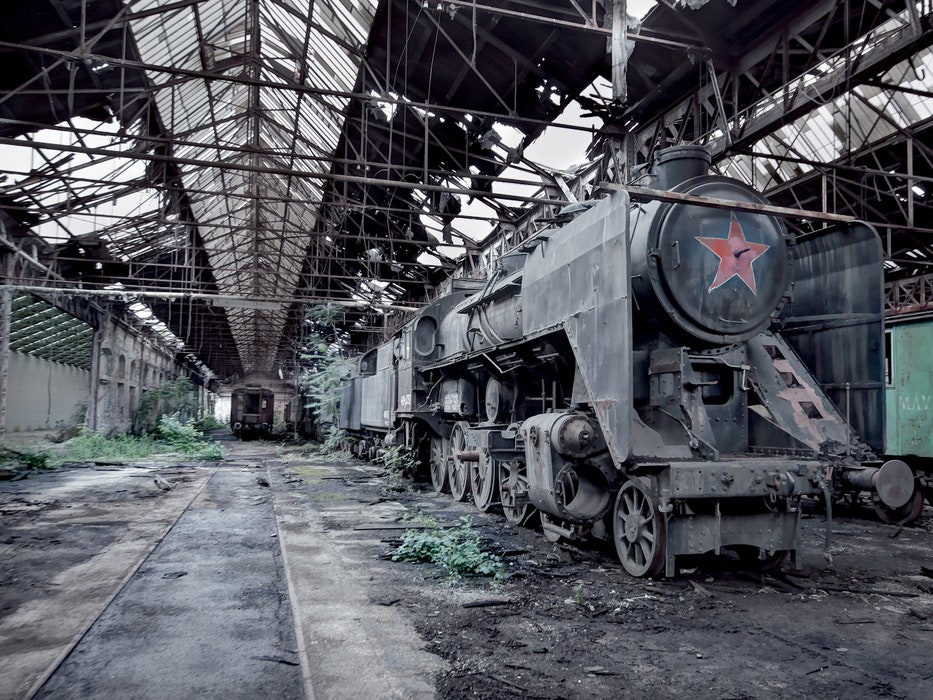
Long before moving to Caceres, I spent some time teaching and traveling around the ex-Soviet republics that straddle the Caucasus Mountains. Cowboy capitalism was rampant in the area and as a result the locals were quickly beginning to realize that perhaps the new reality they had long dreamed of wasn’t as great as they had expected. In Azerbaijan, the only highway that had been repaired since the Soviets had left was the one that ran from the capital to the oil terminal where the pipeline to the West began. The so-called friendly West’s main concern was made very clear on the only smooth road in the country. Beyond that shiny tarmac to the Caspian, the rest of the country’s infrastructure was in steady decay. Once glorious squares that gave homage to the Socialist republic were now covered in weeds. Now, headless statues of Lenin and Stalin presided over crumbling monuments to a different era. The money had run out and there was no one left to care for the grandiose projects that crumbled in each main square as you travelled from Baku to Tbilisi. The new dictators had their own cult of personality to build and mother Russia wasn’t paying in dollars. No one had the time to think or care about the past. Public works projects often tend to be that way. The 4-year politician gets some money from the EU and puts up some Caceres Centro signs that are soon forgotten, left to literally fade away. Now the new idea is to build an escalator in Alzapiernas street to help the steady stream of pensioners who come and visit our fair city get up that steep hill. How long until those rotating stairs stop turning? If grafitiers can’t be stopped from splattering the walls along Pintores and Moret street with their brutally ugly scrawl, how long will it take until something gets caught in the stairs? Alzapiernas (raise your legs) earns its name, especially after a day touring the old town but you only have to climb the stairs and look across the street for a reminder of another project left to rot, the infamous elevator to nowhere.


Thursday, April 4, 2013

Fire and Water

Writing in the local paper. Local issues with a global take. I never translate literally and the editor trims at will to make it fit. Here's my version, then theirs.

I remember watching with amazement, and not just a little discomfort, as the young men in pointy shoes leapt through the air over the huge bonfire. One slight misstep or worse, one glass of vodka too many, would have meant a trip to the one and only hospital in the city. It was spring and my neighbours were gathered in the warm night air in the courtyard of our flat in Baku, Azerbaijan. They were celebrating Noruz, a spring festival shared throughout the region. When I questioned them about what they were doing, they told me that they were following the dictates of their religion and placing wishes as they jumped. True, Islam had only recently been reintroduced to the area after the fall of the Soviet empire, but I don’t recall anything about fire jumps in the Koran, let alone vodka. No matter the case, spring is welcomed with open arms around the globe and is always a time of renewal. Even in tropical countries, the equinox is greeted with the washing of temples and your neighbours dousing you with water when you leave the house. A rather difficult proposition when I was walking to work in Laos but at times a welcome relief from the suffocating heat of the end of the dry season. Here in Extremadura it’s the carpet of green rolling out under a limpid, clear blue sky. Dehesas spotted with wildflowers and migrating birds, and of course the deep thud of the processional Easter drums. However, this year both processions and blue sky were rarer than spotting the elusive black stork. The whitewash in my patio has turned a golf green and there are flowing rivers where I once rode my bike. I tremble every time it rains when I think of the UNESCO age of my rickety roof and can only guess where the next leak is going to spring. If this rain doesn’t stop soon I’m going to have to adopt the Azeri way and jump over a few flames and be thankful that the hospital is nearby.

Friday, April 16, 2010

The Statue of Liberated Woman

Last night's Minaret exhibit was not only a chance to share some photos that I've taken on my travels but an opportunity to retrieve and relive some dusty memories that had been lying forgotten in my 1.0 memory chip mind.

During the evening, a few astute visitors were quick to notice an early Soviet-era statue that features prominently in one of the photographs, thus refreshing my memory in regards to one of my favourite emblems in Baku, Azerbaijan.

While living in the city, my wife and I lived just off Nizami square/Metro stop in the infamous 'Beysh Barmak'. Baku's first 5-story building (thus the name) that was stodgily yet sturdily built during the years of Russian rule. The window panes hadn't been changed since the 5 year plans, allowing the winter wind free access to the flat, but it was a handy address that every taxi driver knew...especially given the fact that I speak no Azeri or Russian, no matter how much vodka I drank.

At the time we lived there (2004-2005), the neighbourhood was central yet far enough out of the actual centre to not have been gentrified beyond recognition (judging from this 2008 photo of the same, the creep has arrived). Local bars still sold cheap local beer with chickpea tapas while shashlyk, kebabs and piti were still the stalwarts of the menuless restaurants. Life teemed under the square in one of the most claustrophobic markets I have ever encountered and villagers sold fresh produce on street corners a few blocks away.

Just next to our building was the Ministry of Foreign affairs. An intriguing place clogged with sparkling black Mercedes that spoke well of the civil servants amazing ability to save while officially earning around $100 a month. The view from our outside balcony stretched beyond the corrupt cars and onto a panorama littered with shaky rebarless 30 story brick towers being built on the earthquake prone clay leading down to the Caspian. The view from our inside balcony however was another world, a quiet refuge of cats and Chechen refugees hanging their coloured washing.

But the most interesting feature in the neighbourhood was precisely the statue that the exhibit's keen-eyed visitors had pointed out.

Standing proudly atop a very Sovietish plinth smack in a fork in the road is the Statue of Liberated Woman, more familiarly known as the Woman Throwing off her Veil....strategically placed by the Soviets in front of the Iranian embassy and bank.

An interesting symbol in a country filled with young people eagerly looking back to their religious roots (even creating facebook groups to destroy the statue) and in the process melding tradition with newfound faith. 21st century fusings of pre-islamic traditions like cleansing jumps over fire with Saudi and Iranian prostelyzing are becoming dogma for some while others are lost in the blind rush to capatilize on the oil boom set to run dry. I mostly use the past tense because change is happening fast.

Hopefully the daring woman looking out to the below sealevel sea isn't lost in the process.

The Liberated Woman

Monday, January 12, 2009

Finding Shade in a Palace on the Caspian in Baku, Azerbaijan


This is why you have come so far. With the Caspian reaching out to the steppe of Central Asia in front of you, the warm winds of the Middle East swirling up from below, and the cool breezes from the Caucasus mountains sweeping down from the north—a mix of styles awaits you in the Old City of Baku. Set among a very eclectic ambiance of embassies and relaxing cats, the Shirvanshah Palace in the middle of Baku is an oasis from another time. Baku's recent communist legacy melts away as you feel the Silk Road's pulse beneath you. The palace is a reminder that for centuries Baku was a vital stop on the Silk Road before becoming the Oil Capital of the world in the early 1900s.

Also published on Trazzler.

Moving Shop

  We've moved house. This blog has moved to  https://troynahumko.com/ See you over there!