About Me

My photo
Troy Nahumko is an award-winning author based in Caceres, Spain. His recent work focuses on travels around the Mediterranean, from Tangier to Istanbul. As a writer and photographer he has contributed to newspapers and media such as Lonely Planet, The Boston Review, The Globe and Mail, The Sydney Morning Herald, The Toronto Star, Counterpunch,The Irish World, The Straits Times, The Calgary Herald, Khaleej Times, DW-World, Rabble and El Pais. He also writes a bi-weekly op-ed column 'Camino a Ítaca' for the Spanish newspaper HOY. His book, Stories Left in Stone, Trails and Traces in Cáceres, Spain is published by the University of Alberta Press.As an ESL materials writer he has worked with publishers such as Macmillan and CUP.

Sunday, July 26, 2020

Of Apples and Saudi Offerings


In Aden, Yemeni activists still live in fear

Next stop on the Camino a Ítaca, a look back more than fifteen years to a taxi ride across Crater in Aden, Yemen and a curious perspective on colonialism. Click over here for the published Spanish version or read the English version below. 


From the outside it looked like most of the taxis that you see across the developing world. Years of ferrying people across crumbling roads, and often lack thereof, take their toll on these essential services. Here in Aden, Yemen, where few people own their own car, they are even more vital, as this biblical city is set on peninsula broken up into three distinct and very separate parts.

It’s a city that is at least as old as written history. Some say when the book of Ezekiel speaks of the Garden of Eden, it was referring to this baking volcanic rock that sticks out into the gulf of Aden. If indeed it once was a lush, green playground for the forbearers of humankind, the punishment was severe. Times have since changed and all that is left is rock, sand and dust.

As we got in, I quickly noticed that this wasn’t your average taxi. A suspicion that was proven true when the wizened old driver turned around and asked me, in an English that would have sounded familiar to his ex-colonial rulers, where we wanted to go.

I found out that he had worked for the English before they were expelled in the late 1960’s and hadn’t forgotten a word since. As he fondly reminisced about life under British colonial rule, I couldn’t help but ask if he didn’t prefer living in the current, albeit flawed democracy. “Democracy!” he spat, “give me a king like they have in Oman, Saudi Arabia or even our old ruler the Queen of England any day.” The anti-monarchist in me grew curious, even if it meant that his driving got even more erratic as he became more excited. “Kings rob at the beginning of their rule but as they get comfortable, they let some crumbs fall for the common people. These ‘democrats’ though, only have four years and steal everything, leaving nothing behind for us!”

Greed however is one of the most addictive of the cardinal sins and once you get a taste for expensive Vega Sicilia wine, it’s hard to drink the local pitarras. When Juan Carlos betrayed his fascist minders and opted for democracy over dictatorship, even war criminals the likes of Henry Kissinger congratulated him. It looked like a new Garden of Eden and a literal example of having your cake and eating it too.

His decision though, is less magnanimous than it seems. The West was increasingly uncomfortable with the anachronism of a dictatorship in its midst, so why not change a caudillo for a king? Europe is full of moth-eaten parliamentary monarchies that retain the medieval idea of hereditary heads of state. So why not one more?

Unlike his generous Saudi friends though, constitutional monarchs are terrorised by ballot boxes. The chance that their subjects might outgrow their sadomasochistic urge to be dominated disturbs their pampered sleep. Here’s where the taxi driving Methuselah might have been half right, this anxiety seems to drive ‘democratic’ monarchs to develop a taste for the crumbs too.

But even if they do, everyone has the right to the presumption of innocence, ex-kings included. A trial by the media is as immoral and as unfair as a monarchy. This citizen deserves the same as other mortals, a trial in a court of law. Only then will even the most submissive masochist see that magnates need to be shown the exit of Eden.  

Saturday, July 11, 2020

Gods and Civil Servants

Parques cerrados y precintados en Úbeda | Ubeda Ideal


Stability or ... much needed change.
The next stop on the Camino a Ítaca...civil servants and premature death. Read the original Spanish version here or the English below.

The frayed, red and white plastic tape spun around in the wind, cordoning off the area like a crime scene. Large blocks of faded plastic lay like bleached whalebones poking out of the sand on some remote beach. Then there was the silence. Streets and squares, normally so full of life, were reduced to leaves blowing under empty swings that shifted in the breeze.

The empty, cordoned off children’s playgrounds during the lockdown is one of the pandemic scenes that I will never forget. The hollow squares next to them, with their chained up plastic tables and chairs, looked like just another quiet Sunday morning but the red and white tape strung between the lampposts was a potent symbol of something very, very wrong.

Children’s parks here in Spain have always intrigued me. In a country that is so child-friendly, I always have always wondered why the majority of children’s parks are so poorly equipped. It often seems as though they are urban planning afterthoughts, acting solely as a complement to the adjoining terraces that do bring in some money to the town hall’s coffers. Yet under the lockdown, one lie empty while the other simply ceased to exist.

The rather morbid image brought to mind that, much in the same way that gods reflect their creators, parks too reflect those that bring them into existence. They are both products of people’s desires, fears and prejudices and both bear the indelible stamp of those that create them.

Their inspiration also comes from parallel sources. Divine inspiration has been known to reveal golden plates to con men in places like New York state, but it almost invariably seeks out poor and illiterate souls living in wretched conditions for its immutable message. Messages that demand unquestioning faith and the occasional genocide in return for questionable future promises.

The inspiration to build parks, in contrast, comes from a more earthly though not altogether less conceited source. One that also has the habit of making questionable future promises. Politicians make promises to their flock, but it’s the civil servants that make them a reality. Public servants that also live in a wretched state.

Blasphemy some may say. After all, the myth of the carefree civil servant is almost as potent and ingrained as that of people rising from the dead, but is it necessarily true?

Once the poor souls have memorized their temarios, regurgitated them and passed go to collect their posts, funcionarios are also damned to live under a system that is as ridged and unforgiving as the harshest interpretations of scripture. They find themselves managed by rules that few really understand and find that, no matter what they do or even how well they do it, the rewards are metaphysical at best.

This stifling structure is reflected in the parks’ design. The kids have few risks to manage and take, no real opportunity to move from one stage to the next. It’s safe, sterile and like the public corps, a premature graveyard of whalebones and ideas.

During this temporary truce with the disease, kids have returned to the parks. Even if they are no zip lines or natural spaces, they still manage to create and to figure out a way to have fun despite the controlled environment. Symbols that even the hardest held myths can be overcome. 


Saturday, June 27, 2020

Fear and Loathing in Siberia

Trans-Siberian Railway, Platskart Class Wagon | thor_ | Flickr
Platskart...open wagon travel.

COVID has created our own Siberias. My next installement on the Camino de Ítaca travels from Vladivostok all the way to Extremadura. Click over to the original Spanish version or the English one below.


We were somewhere around Chita on the blurry edges of Mongolia and China when the vodka really started flowing. I remember, in a vain attempt to make communication, passing around our well-thumbed pocket atlas to the people who continued to fill my glass because at that point the only Russian I knew was how to form a negative, and these people weren’t taking no for an answer. These were professionals.

We had left Vladivostok several days before and had only just crept around the outstretched elbow of China and dropped into the vastness of central Siberia when our fellow cellmates in our dormitory platskart train car decided that even if we couldn’t speak any Russian, we could propose elaborate toasts. Bundles were unwrapped and bread, pickles, herring and russian meat patties were set out to accompany the bottomless bottles of vodka that fuelled our conversations that went nowhere.

With the summer sun skirting the horizon in front of us, the train rolled into one of the endless Cyrillic names that marked the stations along our route in my atlas and I remember saying something like ‘maybe I should sit this round out.’ Suddenly there was a terrible roar all around us and the air became choked with a deafening buzzing sound. A black mass poured into the open windows and breathing became difficult.

By this point, I had been on the move for more than fifteen years, constantly traveling for my entire adult life, either because of music, teaching or writing. Now, I was faced with two less than desirable possibilities. Either I was about to die of blood loss from ravenous Artic mosquitos that seemed to coat every surface or blood poisoning from the next bottle of dodgy looking vodka with a matador on the label that had aluminium foil for a lid.

The epiphany came as vendors competed with the mosquitos for space through the windows. It was time to set up a base, a home and stop moving for awhile. It was time to come ‘home’. It was time to, if not stop, slow down.

After crossing the entire landmass of Asia and Europe, I found my Almohad refuge behind the millenarian walls of Caceres. Travel, however continued to beckon. A tour in the southern United States, a teaching position in Libya, a chance to write about Damascus or a family get together on the prairies of Canada, there always seemed to be a reason. I now had a base, but then something would call me away. 

That is until the coronavirus.

After months of being closed in behind my arabic wall, travel is once again possible. Borders are cautiously opening and airlines are desperate for our business. Look up and you can see the supposed chemtrails have returned to the sky. My doubt is whether to listen to the sirens’ call or let them sing.

A future without travel is inconceivable to me. After all, it’s precisely travel that has made me what I am. What can change though is the distance we move, the focus can shift closer to home. Now is time to travel deeper, now is the time travel on foot. Now is the time to discover those Siberias closer to home.   

Saturday, June 13, 2020

Siren Songs

Sirens

Strange sounds heard on the Camino a Ithaca, my next installment on the journey. Click over to the original here or the English version below.

Saturday, May 30, 2020

Laugh to Keep from Crying

T-Bone Walker | Blues musicians, Blues artists, Black music
I drink to keep from worrying and I smile to keep from crying

In another stop along along the Camino a Ítaca op-ed trail, outsiders. The 'other' that so many fear for some many reasons. Click over to read the originally published version in Spanish or the piece's beginnings in English below. 


Saturday, May 16, 2020

Blessed are the Storytellers

Blessed be the cheesemakers - Album on Imgur

My next stop along the Camino a Ítaca op-ed blesses the storytellers and their less than satisfactory translation into Spanish as narradores de historias, though I do have to say I rather like the ring of bienaventurados. Click over here for the original.


Saturday, April 18, 2020

Corona Kids


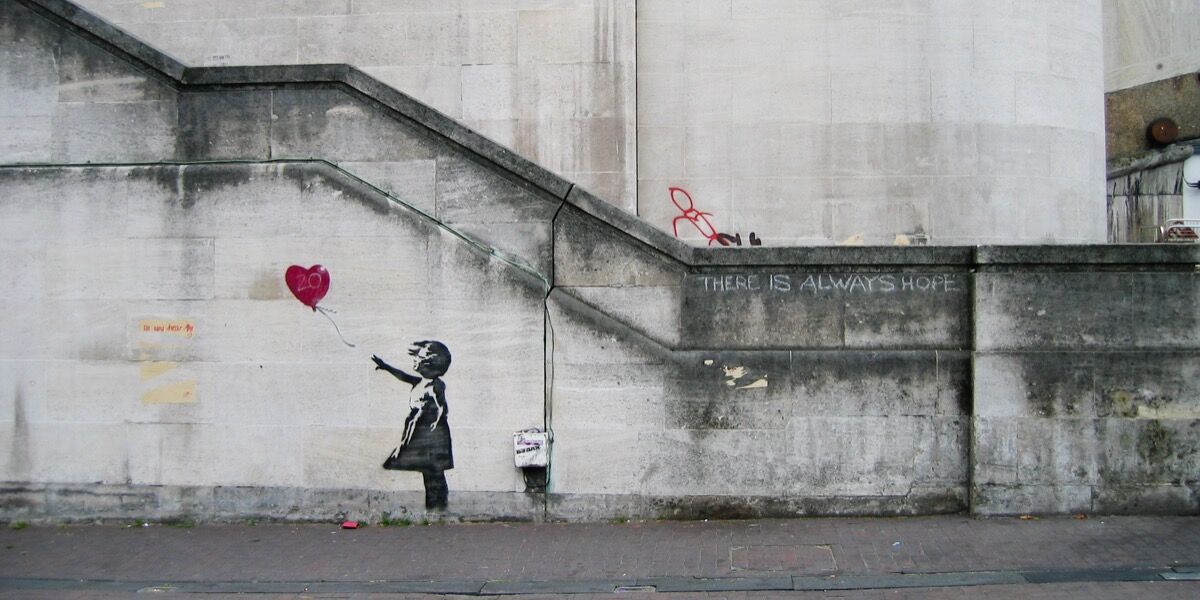
Banksy's 6 Most Iconic Artworks - Artsy  


I began my new op-ed column, 'Camino a Ítaca' today with a piece about the plight of kids under the COVID-19 lockdown here in Spain. Click over to the original here. A real-life Jiminy Cricket tale that began its life in the English version below.

Wednesday, April 8, 2020

Not So Rear Window

Writing in the local paper. Local Issues with a global take. I never translate literally and the editor trims at will to make it fit. Here's my version, then theirs, which can now be seen online (in Spanish) as well.

Sunday, March 29, 2020

Teachers at a Crossroads

Of Monks, Medieval Scribes, and Middlemen - Medievalists.netWith the arrival of the plague, things have become clearer. An opinion piece on the current state of education during the current state of emergency in el HOY. The extended English here and the published Spanish version below, or click on the link.

Friday, March 27, 2020

Podcasting with Rolf Potts

Pandemic dispatches from travelers around the world on Rolf Potts' Deviate podcast.

Sharing a look out my window under the coronavirus lockdown in provincial Spain at minute 35.00. 

Another step in #coronatravel and #windowtravel.

Thanks Rolf for inviting me to participate!

Moving Shop

  We've moved house. This blog has moved to  https://troynahumko.com/ See you over there!