About Me

My photo
Troy Nahumko is an award-winning author based in Caceres, Spain. His recent work focuses on travels around the Mediterranean, from Tangier to Istanbul. As a writer and photographer he has contributed to newspapers and media such as Lonely Planet, The Boston Review, The Globe and Mail, The Sydney Morning Herald, The Toronto Star, Counterpunch,The Irish World, The Straits Times, The Calgary Herald, Khaleej Times, DW-World, Rabble and El Pais. He also writes a bi-weekly op-ed column 'Camino a Ítaca' for the Spanish newspaper HOY. His book, Stories Left in Stone, Trails and Traces in Cáceres, Spain is published by the University of Alberta Press.As an ESL materials writer he has worked with publishers such as Macmillan and CUP.

Saturday, June 25, 2022

¿Qué Calor?


It's getting warm along the Camino a Ítaca. Successive heatwaves have already struck here in Spain and it's not even July yet. Click over to read the originally published piece in Spanish in el HOY or read the English translation below. (PDF abajo en castellano) 

It’s well past the cuarenta de mayo (fortieth of May) and while I might not be seeing sayos (cloak) out on the streets, this week I have seen the reappearance of a few winter coats. Full disclosure, I’m not sure that I would be able to identify a sayo if I was confronted with one, but the brusque change in the weather has meant that some have dug out their winter apparel.

It's almost hard to believe that just over a week ago we were sweating our way through this year’s second heatwave, even if the first in May wasn’t technically classified assuch. Whatever the case, this past heat event was one of the earliest on record. As temperatures remained above 25º throughout the darkest hours of the night, many of us chose to ignore the vertiginously high price of electricity to manage a few hours of sleep under the whirling blades of a fan or, somewhat more luxuriously, be lulled to sleep by the hum of an air conditioning unit.

Now that school is over, we quickly forget that our kids had to leave school early that week because the temperatures in the classrooms were more apt for reheating food than revealing the methodological mysteries of ‘la copia’ (where kids are asked to copy out long texts from books into their notebooks).

Yes, we quickly forget. That is until the next one comes around and this summer holds promise.

Albert Einstein is said to have stated that memory is deceptive because it is colored by today’s events. We are so sure that our memories accurately reflect our past, that what we don’t realize is that what we remember is also a reflection of our current situation, beliefs and values.

In other words, yeah I remember it being hot last week, but now that there is a chill in the air, it wasn’t so bad, was it?

It was. And it’s only going to get worse.

Climate change is no longer a question of if it’s going to happen. It already has. What we don’t know is how bad it will eventually get. These are simple facts that only religious fundamentalists and the overtly greedy choose to overlook. The former because they believe in a celestial dictator who controls everything no matter what we do, while the latter is more worried about their bottom line and have a false sense of security that their money will buy them safety when the water wars begin.

But what about our elected governments? The right seems to want to delude itself believing that the free market will somehow find a solution. The left opts for conning individual consumers into thinking that conscientious recycling and eating less meat will magically lower Chinese and American emissions.

By stating this doesn’t mean that individual steps shouldn’t be taken, but they will not result in drastic changes. What needs to be done is to act now to palliate the effects and prepare ourselves for the successive heatwaves, droughts and wildfires to come. Greening our economy is necessary, but in addition practical steps need to be taken to ready us for the extreme weather events to come. This may turn out to be the hottest summer of our lives, but in the future it may turn out to be the coldest that you remember.

Saturday, June 11, 2022

Inflation


This week's Camino a Ítaca looks at the rising cost of merely taking a breath. Click over to read the original Spanish version in el HOY or read the English translation below. (PDF abajo)

After living and working on four continents, my social media feeds can at times seem like a BBC world weather report. Friends living in Australia and Southeast Asia tend to post in the very early hours here in Spain. During the day, friends and relations here in Europe and across the Mediterranean in Africa fill my feeds. Then, just as I’m going to bed, New York, Calgary and Los Angeles start to chirp in.

The disparity of the time differences is also usually reflected in the content. In just one day, ex colleagues in Hong Kong can be lamenting the erosion of democratic freedoms, while in Yemen they might be bluntly speaking of ongoing famine and nearby missile strikes. While in Key West, Florida ,they find themselves once again preparing for hurricanes.

Ideological differences can also be just as severe. Acquaintances in the Midwest of the United States might be virulently justifying their right to openly carry weapons of war at the same time as British friends post pictures of the endless airport queues they now have to suffer after the Brexit disaster.

The curious thing is that amidst all this noise and disparity a strikingly common theme has emerged in recent months. It’s a general complaint that obviates time zones and ideologies, and it’s getting louder on all sides.

How have things become so expensive?

And while everyone on my Facebook wall unanimously concurs that prices have risen way beyond what can even be considered extraordinary, the consensus stops there.

The right and left may debate about whose fault this is, but the cause is clear. Corporate profits are at their highest point in 70 years.

In Poland they blame the far-right for the people’s inability to make it to the end of the month, while here in Spain Feijoo and his acolytes seem to believe that Pedro el guapo possesses superpowers to cause this phenomenon around the world. But the painful truth is that at least 60% of the price increases we are suffering stem from corporate profits. Sorry Olga and Macarena, it’s not taxes.

Why are corporations raising prices? Simple, because they can.

The global inflation we are experiencing, conveniently hidden behind the veil of a war, has been the excuse to not only pass along costs to the consumer but to inflate prices beyond that and engage in straightforward price gouging.

How is this possible? Easy. While the likes of the ex-minister of Finance, Fatima Bañez joins the ever-growing list of defunct politicians to join the ranks of these enormous multinationals, our economies are forced to depend on a shrinking number of corporate giants with the power to raise prices.

If markets were truly competitive, companies would be forced to keep their prices down in order to prevent competitors from grabbing away customers, but as banks and these enormous companies merge into larger and larger conglomerates, where is this real competition?

Corporations are using the excuse of inflation to raise prices and make fatter profits. Call it extreme left, call it extreme right, but this structural problem can only be solved one way: the aggressive use of antitrust law.

My timelines are screaming under the weight of this abuse, but I wonder…is anyone in the EU listening?

Friday, June 10, 2022

Anachronisms

"Aren't the 'colonies' curious my dear?"

In this week's Camino a Ítaca, a less jubliant Royal Jubilee. Click over to read the original piece in Spanish in el HOY or read the English version below.

What do such diverse countries as Antigua and Barbuda, Australia, the Bahamas, Belize, Canada, Great Britain, Grenada, Jamaica, New Zealand, Papua New Guinea, Solomon Islands, St. Kitts and Nevis, St. Lucia, St. Vincent and the Grenadines and Tuvalu all have in common? 

If you’re having trouble finding a common thread between such vastly different nations, I wouldn’t be surprised. After all, they span the globe and range from huge frozen spaces, such as my native Canada, to tiny South Pacific nations that are difficult to find on the map.

Still struggling? Here’s a hint, Barbados used to be part of the group.

That was until last year when the Caribbean Island nation made the bold move to right a wrong that began in the 1600’s and took their final step in becoming a fully sovereign nation. The country came of age and replaced the Queen of England as head of state with an elected representative and became a republic. And it is just the latest Caribbean country to do so. In 1970, Guyana dropped the Queen as its head of state, followed by Trinidad and Tobago in 1976, and Dominica in 1978. Mauritius, way out in the Indian Ocean, left the club in 1992.

While it may come as a surprise, the rest of the countries on that list all have Queen Elizabeth as head of state. In these countries, known as Commonwealth realms, the queen appoints a representative, such as a governor general which is generally recommended by the popularly elected leader, such as the prime minister or president but the queen remains head of state.

Sometimes these countries are confused with other members of the Commonwealth. Most of whose members are simply states, like India, Kenya and Malaysia, with close ties to the United Kingdom. These do not have the queen as their monarch and who elect a head of state from among their own people.

But these are tough times for those with blue blood. Life is no longer just a steady stream of Vega Sicilia and jilted former lovers. During a recent tour of the Caribbean, Prince William and Kate, the Duchess of Cambridge were greeted by more protests than admiration as they drove around in colonialist parades. Local protesters in Belize and Jamaica called for a formal apology by the royals for their family’s role in the enslavement and brutalization of Africans and demanded reparations. Something they refuse to do.

As they treated their sunburns back home, Belize, the Bahamas, Jamaica, Grenada, Antigua and Barbuda, and St. Kitts and Nevis all announced plans to follow Barbados’ lead.

Then another royal shock happened over the weekend, not in Sanxenxo, but in our antipodes. Australia ousted their populist right wing Prime Minister and elected Anthony Albanese. The Labor leader is an avowed republican who has stated that Australia should hold a referendum to remove the queen as head of State.

Growth and change are inevitable. As these brave nations have shown, coming of age and becoming a truly democratic country does not have to be traumatic. The word ‘republic’ doesn’t have to mean rebellion. It simply means choice. The power to choose heads of state and peacefully oust them if and when necessary.

Saturday, April 9, 2022

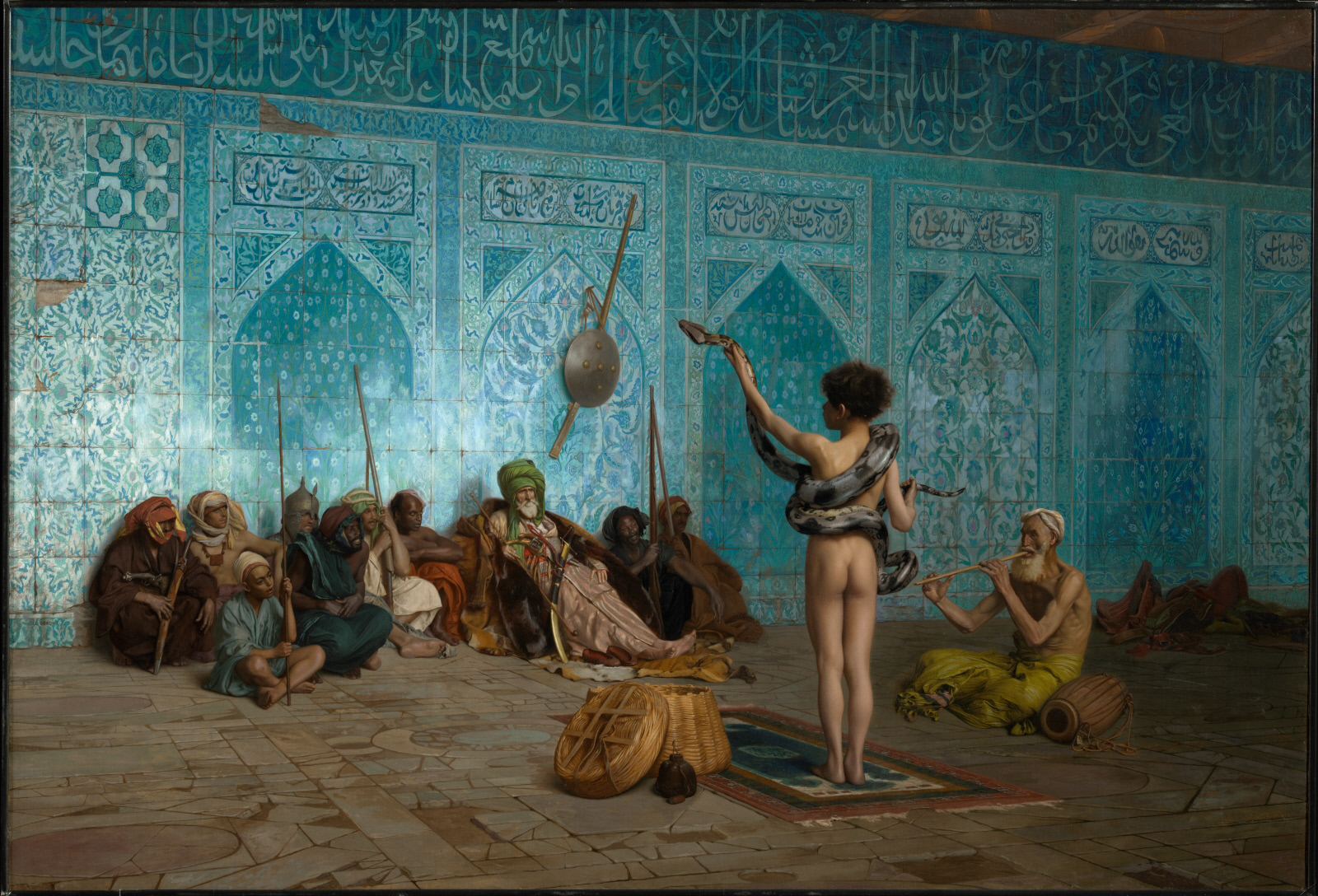
Snake Charmers

In this week's Camino a Ítaca, a spider bite turns into a near mortal experience in a barbaric country. The populist No-Tax brigades are once again singing their siren songs from their particular hymn book. That one that sees public services disappear, while they enjoy their private plans. Click over to read the original Spanish version published in el HOY or read the English translation below. (PDF en castellano abajo)

It was just a little black spot on the drummer’s hand with a faint white ring around it, like an inverse bullseye. It didn’t look like much to me but when we showed it to another member of the band who was from nearby Louisiana, his face immediately grew serious.

The band had a rare night off during a tour through Florida and were staying the night in one of those nameless cheap motels that dot the secondary highways that crisscross the United States. Outside, the constant hum from the insects swarming out of the swamp just behind the motel drowned out the aged, buzzing neon sign from the run-down petrol station next door. It sold soggy microwave hamburgers, beer, taxidermized alligator parts, fishing supplies and ammunition and was the only other building for miles around.

Things quickly got worse. The drummer’s body grew rigid, his pupils dilated and he began to tremble. His temperature then skyrocketed and a rash broke out all over his body as he slipped in and out of consciousness.

During the short spells where he did regain awareness, he would repeat one thing over and over again, like a mantra, “please don’t take me to the Emergency Room. I don’t have any insurance and I can’t afford it.”

This is the harsh reality of a world without a social services net: a terrified man on a lumpy motel bed undergoing convulsions who was horrified, not necessarily at the thought of dying, but at the thought of surviving and then being forced to declare bankruptcy after a visit to the ER for a mere spider bite.

With inflation sky high, the no-tax brigade has decided to escape the security of their gilded palaces and their gated communities and mix with the common folk to pass on a deceitful message: the blame for the nation’s current malaise are taxes. And their message is taking root.

Now that the pandemic seems to be moving into our rear-view mirror, the energetic support we once had for our healthcare workers at eight o’clock every evening has become something like a memory we’d rather forget. Like that time when you drank a little too much cava at the company Christmas party and insisted everyone learn the Macarena. Seemed like a good idea at the time but best to move on.

Funnily enough, I don’t completely disagree with them. It is true, some taxes should come down, as stated in article 31 of the Spanish constitution, all shall contribute to the support of public expenditures according to their economic capacity. But if we interpret this same article correctly, some should also go up.

Why is it that companies like Google and Facebook barely pay any taxes in this country? While you, me and the woman who owns the multitienda down the street pay between 24 and 30%?

How and where our taxes are used is definitely subject for debate. But basic services like public health and schools must be sacred and well financed. It’s something the vast majority of us who can’t afford private health plans and private schools must agree on. That, or imagine yourself taking an antihistamine after a simple bite and praying that you see another day. 

Saturday, March 26, 2022

Sacamantecas...Here Comes the Bogeyman!


The specter of something dark and frightening runs through this week's Camino a Ítaca. Progressive politicians afraid of their own shadow look on with terror as real-life Bogeymen and women ride the wave of their indecisiveness and inaction. At least I learned a great new word out of it, sacamantecas. Click over to read the original article published in Spanish in el Hoy or read the English version below. (PDF en castellano abajo)

I grew up in the 70s in western Canada. Back then, when an authority figure, most likely your parents, wanted to frighten children into good behavior, they would say ‘watch out or the bogeyman will get you’. Many immigrants to the area had Polish, Ukrainian or Russian roots and if their children misbehaved they were told that another creature, Baba Yaga, would come for them and use their bones to build her house in the woods.

These threats didn’t only occur in families with European backgrounds. The Inuit people of northern Canada had a similar figure, the Qallupilluit, a mythical creature with long nails and green slimy skin that was said to kidnap misbehaving children.

Here in Spain you have to look no further than Goya’s etching, que viene el Coco, to see that this figure, meant to tame and domesticate children. is universal.

Parenting has changed since then. We now can no longer imagine letting a child ride shotgun on your lap in the car, let alone traveling without a seatbelt. The idea of threatening a child with an icy death in the waters of the Artic for a small offense or suffering an eternity burning in sulfur in hell for a sin against the Judeo-Christian tradition borders on child abuse.

Yet if parenting has changed so much, why haven’t political parties evolved too? If these paternalistic empty threats are no longer considered effective or even moral, why do they continue to use them?

After months of unprecedented inflation, protests have finally erupted from two of the most punished sectors of the Spanish economy, the rural environment and the lorry drivers who transport their goods. Sectors that have seen their businesses pushed to the edge by the unfair practices of a neoliberal model whose intrinsic goal is to achieve maximum profit, no matter the costs. Yet these protests were scoffed at, said to be composed of far-right factions and señioritos on horseback. It's true, they were there, but so was the village grocer who also likes to go hunting at weekends.

What about your electricity bill? Have you turned down your thermostat because Borell asked you to do so? Or had you already done so because you had to choose between leaving it at 20 degrees or eating meat twice a week?

Yet where are the trade unions? Where are the general strikes? Has the joke of ‘just wait until the right governs and then they will see how we protest’ become reality?

The threat of the bogeyman has worn thin. The populist siren song of the extreme right only grows stronger while the left continues to fret about who can access bathrooms rather than directly confront the abusive practices that have seen petrol and energy companies registering record gains while inflating prices.

You can't have your cake and eat it too. Social democracy needs to take a firm position in this world of greedy bogeymen before they take power and remove what remains of our labor rights.

Real life Baba Yagas exist. They sit in places like the Kremlin and fund extreme right groups from Puigdemont’smafia to the Calle Bambu. It’s time to act before el Coco moves from myth to reality.


Saturday, March 12, 2022

How do you Say your Surname?

This week's Camino a Ítaca looks back to my childhood and then turns to the deadly present. A look at War. Click over to read the originally published version in Spanish in El Hoy or read the English translation below. (PDF en castellano abajo)

The first day of school was always an anxious time for me. My biggest worry wasn’t necessarily regarding our new teacher or how difficult the material would be. What I constantly fretted about was how my new teacher was going to pronounce my surname. Were they going to mangle it and make it sound more ‘foreign’ than it actually was, or would they make it sound somehow ‘English’? I agonized over which way were they going to pronounce the ‘u’ and if they were going to place an emphasis on the ‘h’, which is pronounced in English. Those seven letters have raised a lot of questions throughout my life.

Being born and raised in Canada, I’ve had people read my surname and surmise I had some distant First Nations ancestry simply because of the way it sounded. Conversely, I’ve also had people believe that I was Japanese, at least until they met me in person. As someone from the ‘new world’, the possibilities were endless.

It wasn’t until I moved to Baku, Azerbaijan to teach that I encountered people who instantly knew where it came from. I would write my name up on the board for my mostly Russian speaking Azeri students and they would immediately say, ‘Were you born in the Ukraine?’

I would tell them that I hadn’t, my paternal grandfather was, but it was called Poland and the time. He had escaped the Ukraine somehow in the thirties and for a reason unknown to us, like many of his compatriots, ended up in Canada. The Canadians welcomed him to the country, if only briefly, and then asked him to join a different queue. One that involved enlisting in the Canadian army and heading back across the Atlantic to a Europe he had just escaped to fight in the Second World War.

Because of this family history, you would think that the recent tragic events might have affected me more than the normal news cycle. But I can’t say it has. Even if you add to the fact that my only brother lives in Poland, someone who is constantly checking the available flights and trains west the following day, I can’t say that this war is somehow different, somehow special.

What it is, is war.

My roots may run deep in the Ukraine, but in all of my travels, it’s a place that I have yet to see, one that I have yet to experience. I know no one there. That said, I have traveled, lived and worked in places like Yemen, Syria, Colombia, Ethiopia and Libya. I have former students, friends and colleagues who have also had to flee their homes, often at a moment’s notice in equally terrifying conditions.

Yet for some, this latest war is somehow more profound. For some reason it means more than others. The Russian aggressor is somehow more insidious and the cruelty somehow more evil than the others being fought in ‘barbarous’ lands.

And here is where the inherent racism lies. War is war and each one creates refugees. It’s equally as heinous in Libya as it is in Lviv and makes me realize more and more that a surname doesn’t matter. People do.


Saturday, February 26, 2022

The Great Silence


In this week's Camino a Ítaca there is silence. A great silence that seems to have been purchased at an extreme and dangerous cost. If the Emperor isn't wearing any clothes, he must be told...even if he is from your political party. And if they are guilty of crimes...let them pay. Click over to read the originally published version in Spanish in El Hoy or read the English version below. (PDF en castellano abajo)

Can you hear that silence? Deafening, isn’t it? It’s a silence that has gone on far too long and in the process has become convention. Its presence now seems immutable and is here to stay.

It’s a silence that first emerged when there was simply no recourse to it. Back then, breaking that silence meant risking your life. This forced gag order briefly disappeared close to fifty years ago with the jubilance that freedom can bring. But since then, it has slowly and insidiously recrudesced, reestablishing itself in the cities and dehesas of these lands.

It’s a hush born out of a cynical indifference that has metastasized among the general public over the ensuing decades. This begrudging apathy among us has been fueled by the incessant scandals that plague this otherwise wonderful country. Ongoing outrages which give rise to self-fulfilling aphorisms like ‘the rich never lose’ and ‘the powerful never concede’. Phrases that try to put into words the glaring unaccountability that the political classes enjoy.

This unaccountability didn’t just suddenly appear. It has been purposely created and then safeguarded by the very people who make the rules, thanks in large part to that very Spanish institution, aforamientos (inviolablility). Look up the word in other languages and you won’t find it. It simply doesn’t exist. In 2019 the Gonsejo de Gobierno resolved that they would begin a process to eliminate it, but close to 3 years later and, surprise surprise, no progress.

Yet another silence falls over the manmade island of Valdecañas while it awaits its definitive fate. A corrupting hush that was even heard in the pages of the New York Times. It’s the sound of what might turn out to be one of the most expensive calamities in the long and tragic history of Spanish city planning. One that may end up costing the taxpayers of this region up to 200 million Euros. To put that in some sort of perspective, more than twice what the second phase of the new hospital in Caceres will cost.

Yet where is the accountability? The only anger that seems to be heard is directed towards the ecologists that denounced the project 48 hours after both main parties approved the project in 2006. But one thing is to question whether a manmade island, created by the constant damming of a river, can be considered ‘natural’, while it’s a completely different matter to break the law simply because it is inconvenient.

Who is really to blame for this? The ecologists for whistleblowing? The owners for buying something they thought legal? The promoters who were allowed to continue building, even after a sentence from the TSJEX declared the plan illegal in 2011? While they all may share some of the blame, it’s abundantly clear that the people in power are directly responsible. These elected representatives who not only allowed this to happen but who openly encouraged it are responsible.

Yet where is the raucous call for some sort of accountability, for some sort of fairness?

There’s no need for revolution. The only thing required is responsibility and justice. A call to modify the refrain quien hace la ley hace la trampa (those who make the laws, make the loopholes) to the much more just quien rompe la ley, sin importar quien es, paga (who breaks the law, no matter who, pays).


Saturday, February 12, 2022

When Woke Went Weird


This week's Camino a Ítaca explores how woke went from being a genuine movement for peoples to recuperate their dignity to some catch all phrase of every pet concern out there. Time to reset the word and bring it back to its original specs. Click over to read the original piece in Spanish in El Hoy or read the English version below. (PDF en castellano abajo)

Don’t look up. And I mean this seriously, at least if you’re walking along the excrement splattered street of the Arco del Cristo in Caceres. The main access to the UNESCO core of Caceres should have a warning sign at the entrance that reads: Enter at your own risk.

If you do choose to take the risk along the defile, perhaps wanting to catch a better glimpse of the belltower of Santa Maria or perhaps take a selfie before the irregular Arco de la Estrella, take my advice and walk in the middle. If not, consider that you, your hair and the shoulders of your jacket have been forewarned. Caceres, like many other cities around the world, has a serious problem with pigeons.

And I’m confused.

Something happened to us. Some sociological twist took place over the course of this new millennium that has turned the world as I had come to know it upside down. It’s a phenomenon that reaches far beyond our borders or perhaps it is one that has reached us from afar. Sure, the goddesses Ishtar, Venus, and Aphrodite may have all been represented by doves and in Christian iconography the dove is said to represent the Holy Spirit, but these are all myths. Since when have pigeons gone beyond this and have acquired the status of a protected species? In fact, in a broader context, since when did animals become more important than fellow members of our own species?

One of the most egregious instances of this growing trend recently took place in the ravaged and betrayed lands of Afghanistan as the Taliban waltzed into the capital and easily retook control of the country after twenty years of war. Multitudes of Afghani families whose members had worked with the forces braved just about everything you can imagine to get to the airport before it was too late. A desperate and dangerous attempt to flee the country before they were assassinated as traitors by the incoming maniacal messiahs. Imagine their horror as they shivered in the freezing cold and looked through the chain link fence only to see that the British had fleeted airplanes to repatriate dogs ahead of them.

Animals ahead of people.

People, I might add, who had risked their lives to work for the coalition. By saying this, I have nothing against animals. But this movement has reached a point where it raises questions as to what it means to be human.

Closer to home in Caceres, the town hall has had to go to extreme lengths in trying to solve this avian plague and not provoke this power lobby. It was finally decided that an enormous cage would be built to trap and house the birds until they could be then set free. Imagine a Disney-like avian Free Willy. But where is the wild for them? Do they think some North African country can be persuaded to take them in? Then there’s the fact that pigeons are incredible navigators. Some birds can find their way home from nearly 1,000 km away.

In these times of such alarming narcissism, I wonder if somewhere along the way we forgot what it means to be human.


Saturday, January 15, 2022

A Confused Europe

Three Kings Parade

In this week's Camino a Ítaca, travel returns. But it's a return like no other...a dystopian world of conflicting messages that alarm and confuse the traveler, mostly for no reason. Click over to read the original in el HOY in Spanish or read the English version below. (PDF en castellano abajo)

It always catches me off guard no matter how many times I experience it. We had dropped through the thick yellowish smog covering Madrid and coasted into Barajas just after the New Year when I heard it once again. Amidst the flight attendant’s increasingly exasperated pleading with heedless Germans to please remain seated, there they were: Christmas carols. The heady mix of her frustrated pleas and the complete disregard of some of the Germans as they fell over each other with each bump, mixed with Mariah Carey telling me that all she wanted for Christmas was me, made the scene even more surreal. We had boarded a plane in 2022 in Dusseldorf and there in Madrid we had been thrown back in time to Christmas 2021. It was the holidays on repeat.

It’s actually one of the things I truly admire about Spain. This ability to maintain its singularitywhile adapting and molding itself to our globalized world. Apart from a few crazy loons who insist that Islam was the only imported religion from the Middle East, the vast majority of the people here are able to synthesize Santa with the Three Kings, just as easily as they accept whipped cream on their roscon de reyes or Frank Sinatra singing about White Christmases alongside the eerie soundingchildren singing about fish drinking in the river. But even if I do admire it, it does take me by surprise every year.

And last year was like no other. Traveling during the reign of omicron has been bizarre. I first sensed it as we checked our luggage and saw the fear in the flight attendants’ eyes as they nervously flicked through a photocopied bunch of sheets stating the different restrictions that awaited each passenger at their final destination. The usually routine question, “Where are you flying to?” never held so much hidden meaning. The questioning continued. Do you need a test? Do you have a COVID passport? Did you wash your hands after using the bathroom? I began to envision an emergency team in full PPE gear awaiting us in Germany that would put us through all kinds of tests, but once again, my imagination was completely off the mark.

On arrival the only thing we were met with was my brother-in-law telling us that we were lucky, in two days’ time the Germans were going to enforce a quarantine for travelers coming from Spain. No PPE emergency teams, no tests, just our luggage awaited us.

My holiday travels took me across Germany and then I crossed into Poland and there protocols and routines changed again. After landing, I was asked to show my QR code for my vaccination passport, but they didn’t check it against any ID. As it was in Spanish, it could have been an ad for Mercadona for all they knew.

And it’s precisely that, these constant changes. All of these incongruities drive the distrusting to disbelieve, to reject science and to not get vaccinated. This constant improvisation makes me wish that when we landed another song was playing. A song that somehow fast forwarded us ahead to when this pandemic was well behind us. 


Sunday, December 19, 2021

Cielo, Tierra y Agua


En el HOY

El pulso de la provincia de Cáceres fluye por un gran valle de treinta kilómetros de largo y seis de ancho en el Parque Nacional de Monfragüe. Esta Reserva de la Biosfera combina tres elementos vitales que hacen de cada visita una nueva experiencia de aprendizaje.La ultima de mi serie de seis partes sobre viajes por la provincia de Cáceres publicada por el HOY.

@Kevin Postle
The pulse of the province of Cáceres flows through a great valley thirty kilometers long and six kilometers wide in Monfragüe National Park. This Biosphere Reserve combines three vital elements that make each visit a new learning experience.


Saturday, December 18, 2021

Is WOMAD a Colonialist Adventure?

The Main Square during the evening concerts

In this week's Camino a Ítaca I take a look back at the legacy of the WOMAD festival in Caceres from a different perspective. Click over and read the original in Spanish or read the English version below. (PDF en castellano abajo)

Winston Churchill once said that history would be kind to him. The funny thing is that his belief in this deluded fact wasn’t precisely because he had been benevolent, progressive, made people’s lives better or any such thing. It was simply because he intended to write it. With a worldview like that, how could someone go wrong?

 I mean, if you consider that out of the nearly 200 countries in the world, the British have invaded all but 22. A worldview like that would make sense. My math skills aren’t the best, but that is just about 90% of all countries. Countries like Mongolia, Bolivia, Chad and Uzbekistan seem to have avoided their umbrellas, tea and questionable food. But those few that have slipped their noose, seem to have done so due to their lack of accessibility than British desire for control.

 The stain of colonialism runs deep in the psyche of the country. I have sat in pubs in the U.K and have had genuinely good-natured people buy me a drink simply because I was from the colonies. Even stranger is that this misguided, yet good-natured colonialism has been freely adopted and deeply internalized by countries like Australia and my own, Canada, who continue to maintain a foreigner, the Queen of England, as head of state. They happily remain under a Wellington boot when even smaller nations like Barbados have been able to emancipate from her cold embrace.

 This colonial outlook however isn’t limited to countries. Here in Extremadura we have a case where, in their ‘benevolence’, the British came to bring culture to this lost region of Spain. Back in 1992, Peter Gabriel came as a messiah that was going to bring world music to this quiet corner of Spain with WOMAD. I truly believe he did so with good intentions and the region was only too happy to be recognized.

 But a lot has changed since. Close to 30 years later, we are still paying considerable tithes to a foreign company that, while happy to take our money, act like colonial leaders once did. It’s an attitude that smacks of, ‘they should be happy for what we have brought them’. But therein lies the question, should we? Seriously ask yourselves, what is the legacy that WOMAD has left behind? I can say that I have seen some great acts like Eliades Ochoa and Salif Keita. Bands like Los Lobos and others were before my time, but it is undeniable that they haven’t brought in some wonderful artists. But what else?

 After a relationship that is going on three decades, what have the left behind other than what I once termed in these very pages, WOPAP, plastic and piss? Is there any real commitment with the community beyond the actual concerts? If you think of other festivals, and we need not look further than the Irish Fleadh in Caceres, with their involvement in workshops in schools across the city, where is the social exchange when we are paying them close to half a million Euros every year?

 The idea of the festival is positive, but it’s time to negotiate as equals and not as colonials happy to have the queen of another country’s face stamped on your money.


Moving Shop

  We've moved house. This blog has moved to  https://troynahumko.com/ See you over there!