About Me

My photo
Troy Nahumko is an award-winning author based in Caceres, Spain. His recent work focuses on travels around the Mediterranean, from Tangier to Istanbul. As a writer and photographer he has contributed to newspapers and media such as Lonely Planet, The Boston Review, The Globe and Mail, The Sydney Morning Herald, The Toronto Star, Counterpunch,The Irish World, The Straits Times, The Calgary Herald, Khaleej Times, DW-World, Rabble and El Pais. He also writes a bi-weekly op-ed column 'Camino a Ítaca' for the Spanish newspaper HOY. His book, Stories Left in Stone, Trails and Traces in Cáceres, Spain is published by the University of Alberta Press.As an ESL materials writer he has worked with publishers such as Macmillan and CUP.

Wednesday, July 14, 2010

A Different Iran


One of the strongest memories I have of Iran is standing outside a regular neighourhood mosque covered in the black mourning flags that are so typical there. Decades of negative imagery on T.V made my wife and I unsure about entering the courtyard. Finally we ventured in and ended up parting ways. Suddenly I heard a commotion only to turn around and see my wife engulfed by around 40 women, all curious as to where she was from...friendliness and hospitality that we were to encounter wherever we went.

At every turn we found things that ran against the facile stereotype propagated outside its borders.

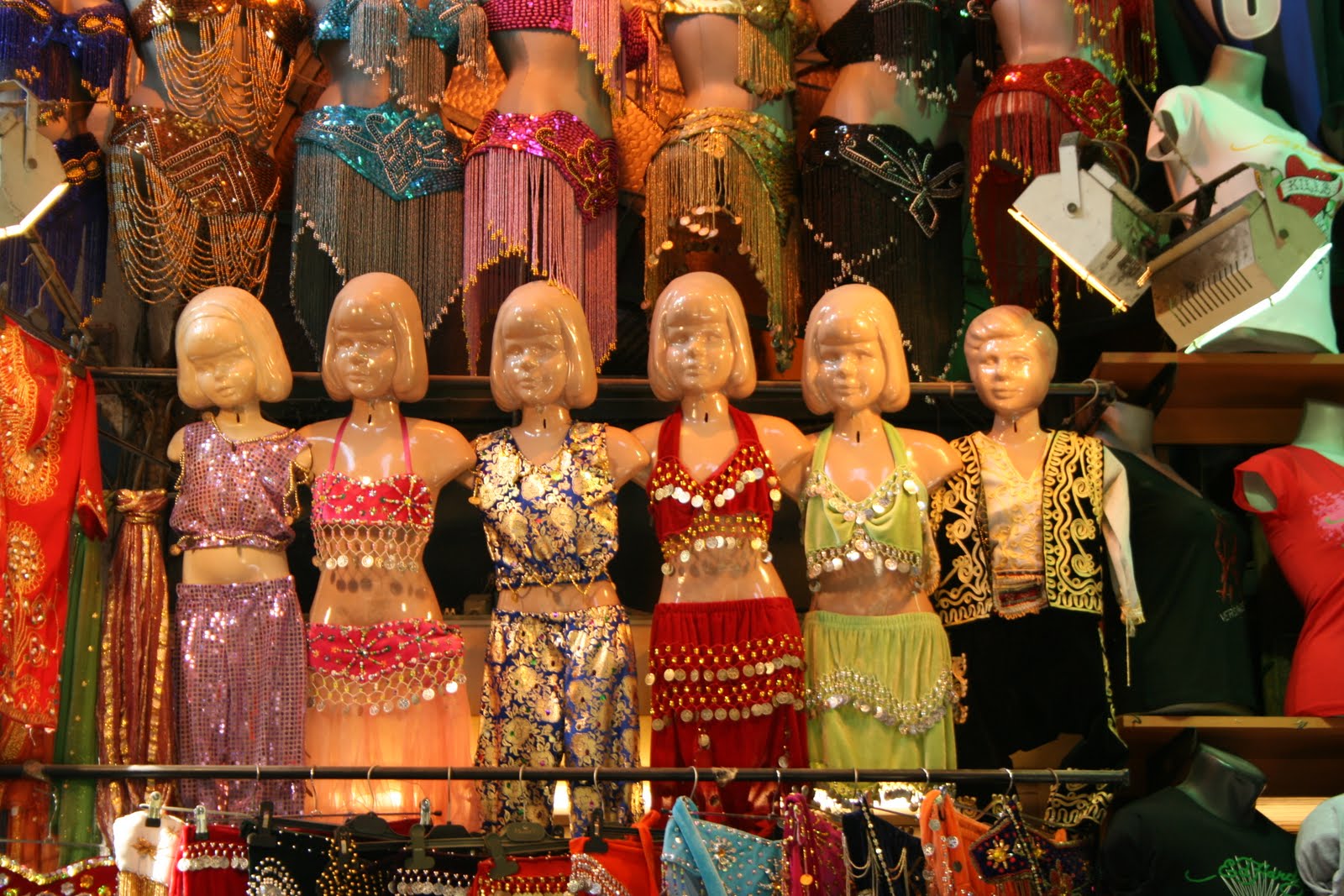
Another shock were the fashionistas in northern Tehran, words would be hard to describe it but perhaps paintings can.

I've just come across this wonderful young artist from that huge city at the foot of the mountains whose paintings show that world. Many may have heard of Saghar Daeeri, but if you haven't, definitely click over for more.

Tuesday, July 6, 2010

A Walk in Istanbul


I took a walk awhile ago with my Couchsurfing host, now friend, Oya. We started in the Istanbul of the guidebooks and ended up in the Istanbul of her childhood. A walk that took us from the tank tops of Eminonou to the hiijabs and niquabs in Fatih, with a short detour to see the black robes through the last remaining churches in Fener. Needless to say which was more interesting, the guidebook loses once again. Published in Singapore in The Straits Times.

Monday, June 14, 2010

La Barrosa

8kms of beach, just under 30º and no one else in sight.

It was a good weekend.

Monday, June 7, 2010

The Curse of Too Much

More than 20 centuries ago, Aristotle wrote that ethics and therefore happiness lie somewhere in the middle of extremes...where that somewhere exactly is has been debated since his Nicomachean Ethics came out, but few people would dispute that, to a certain extent, some truth lies in his premise.

The Iberian peninsula and Spain in particular has literally been the crossroads of Europe for time immemorial. From prehistoric man fleeing the advancing glaciers during the last ice age to the 8th century Arabs and Berbers crossing the straight of Gibraltar from Africa and now the millions of Nordic Europeans who today flee the stress, gloom and rain endemic to their homelands.

This movement of peoples has obviously left its mark on the land. Drive 100kms from here and you find stone age tombs buried under Roman ruins. Arabic castles dot the mountaintops and Visigoth churches lie lost in age old olive groves and we can't forget the scenic German men wearing socks and sandals.

The fact that the Spanish civil war was only a trial run for the Nazis and their fascist allies also means that Spain did not suffer the massive destruction that both France and Germany endured when fighting the World Wars.

All of this means that at every turn it can seem that there are castles clinging to each cliff side and even more beautiful medieval churches lording over every whitewashed village.

It also means that there is too much to keep up. A closer look at those castles shows that some are indeed made of sand and are crumbling. Step closer to that fantastic church and notice the growing cracks that spider up the bell tower. There is just too much to keep up.

And here lies the problem, in a country so dependent on tourism, just how much money should be spent on conservation and should that money only be spent along the coast where 97% of all the tourists head? An even deeper question could be asked, are we conserving for the tourists' benefit, or for history's sake?

This problem has stuck very close to home recently, uncomfortably close in fact. Here in my refuge in the shadow of the Almohad-era wall in Caceres a crime against Spain and the world's patrimony is being committed, and what's worse...it seems the authorities either could care less or are unable to act.

Just down the street from me, the Adarve del Cristo, lies an abandoned 12th century tower. Years ago when survival was at the forefront and conservation in the background, the tower was converted into a dwelling. For years it served a second life but has now been abandoned for years. The roof that once sheltered families now lies half caved in and even has cacti growing from the tiles.

Its abandoned state was sad enough, but over the Easter celebrations, local junkies decided to break down the door and use the place as a shooting den. Since then, homeless people and scrap dealers have been stripping the building of anything valuable and in the process damaging valuable archaeological remains, a modern day sacking. Repeated calls to the police lead to nothing, for under Spanish law they are powerless to act without an order from the owner. Articles and pleas in the local newspapers have also led to nothing as the tower dies a slow and painful death with its new tenants.

The disinterest and inaction only makes me wonder, is there a curse of too much?


Sunday, May 30, 2010

A late May Afternoon


The 20's of May are almost finished and the 7pm sun is still hot enough to bake the dust that swirls up in the heat.


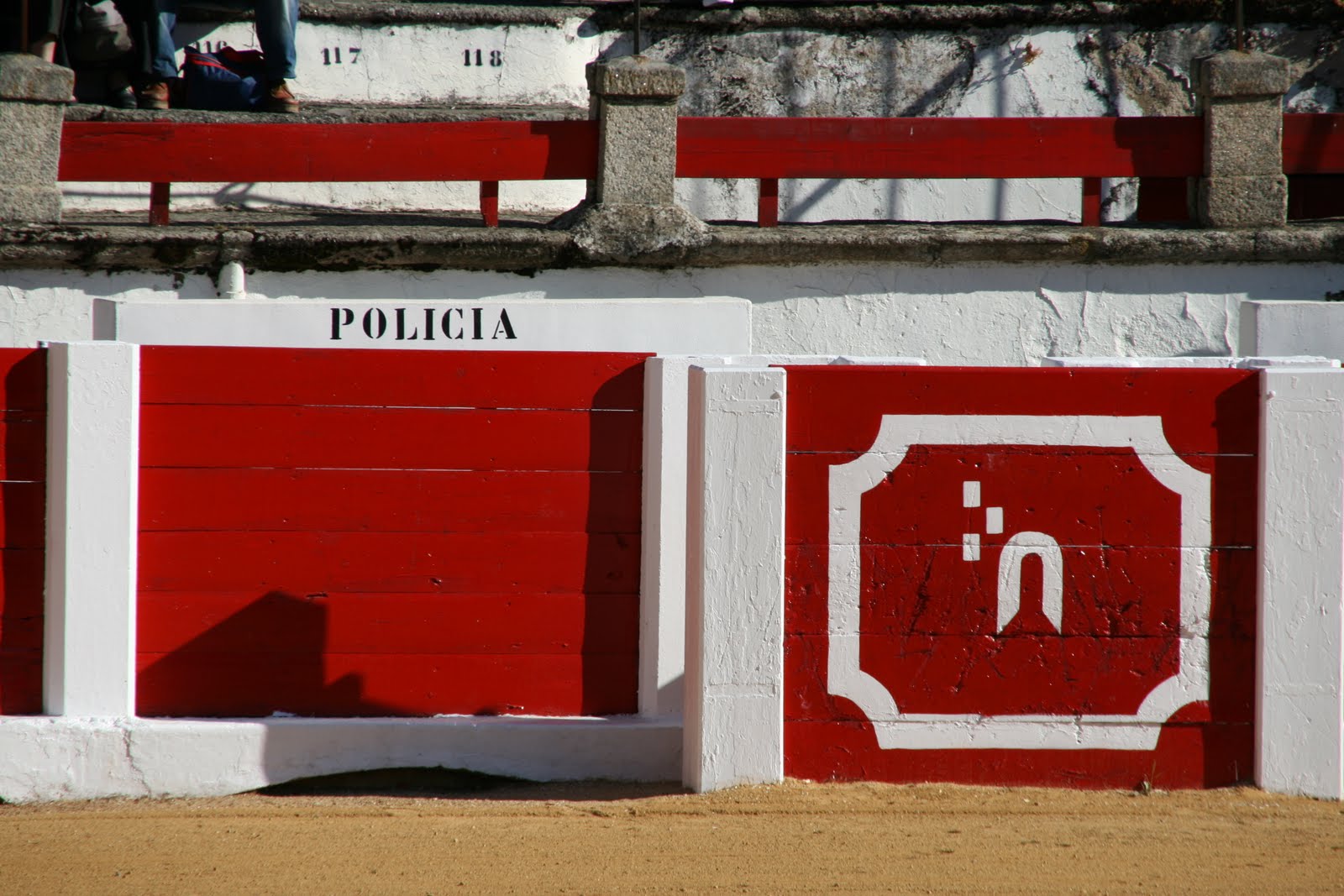
The festivities have yet to begin and the police are still in the shade. The very recent whitewash would still be wet if the temperatures weren't in the 30's. The quick facelift paint job doesn't work...the square shows its age. Layers of lime make interesting forms, but even years of people sitting on the same spot have yet to smooth polish the uncomfortable granite seats that also bake in the sun.


The crowd is definitely not only made up of men...close to 50% are women, some dripping in pearls, and others dripping in youth. Shawls and fans are eagerly thrown into the ring, as well as hats and wine skins, all are thrown back.


Many complain that what is seen today is a shadow of what it used to be... Shadows indeed.


One man's boredom leads him to shout, 'Music maestro!'...The paso doble lightens the lengthening shadows. Some say there is method to when the municipal band strikes up, but some also say there is method to madness, here there is neither.


Dogmatists on the Left have tried to demonize the fair, claiming that it is a right-wing hangover, unfit for such civilized times in which we live. Closet fans on the Left watch in secret on blue screens in their living rooms, then switch between McDonalds ads, Boxing, CNN footage of the Israeli army attacking aid convoys and Lady Gaga videos documenting the more civilized acts of our times. Right or Left, the flashes of colour Picasso raved about are still there.


Critics point to the empty seats...and here they are right. Whether the ring was half-full or half-empty depends on how you look at it, but popular they still are. Popular in the truest form, for all ages and classes. The extremely pricey tickets could have something more to do with the empty seats than regurgitated Nordic slogans calling for bans.


The sun mellows and the swallows invade the ring, dive bombing for bugs among the sand. The whoosh of the storks returning to their nests overhead is at times the only sound in the golden light. Everyone here wants to leave having seen a miracle, a masterpiece....next time, next time.

Friday, May 21, 2010

2 looks at Spring in Extremadura

It's brief, violent and colorful...


Then it's gone


Still learning that you don't have to go far to see something worth seeing.


Wednesday, April 21, 2010

Is that Alaverdi?

Henri Cartier-Bresson: The Modern Century A 1972 photo of a Georgian family picnicking near a medieval monastery, part of a series taken in this retrospective at the Museum of Modern Art.

We walked into eastern Georgia across a wooden bridge reinforced with rusty iron beams that boomed as huge tree trunks slammed into the pillars. The low crossing spanned a wild white water river that had recently flooded. Most of the flooded channels were now dry but their scars were unmistakable. The main river that was delivering the wooden gongs however, still tumbled out of the Caucasus with purpose. It was late autumn and definitely wasn't warm. The not so far off peaks were already heavy with snow and down in the valley that year's wine had already been pressed and would be soon ready to drink.

As we crossed, the guards spoke with my wife in the international language of Real Madrid footballers, perhaps covering for the fact that they couldn't find Spain in their early 90's computer, perhaps mildly interrogating her, maybe flirting, maybe a combination of all the above.

My passport received barely a grunt.

We were crossing from Azerbaijan, a country in which we had just spent four of the eventual 12 months we would spend astride the Caspian. Crossing a border that technically hadn't existed under the USSR, but one that now marks one of the unofficial lines between East and West, between Christendom and Al-Islam. President Bush had stopped in the Georgian capital on his Freedom tours, his henchmen Cheney and Rumsfeld had only visited the oil terminals in Azerbaijan.

We picnicked near where I think the above photo was taken. Is it Alaverdi?

Fetish cloths hung tied from trees that had lost their leaves and we saw a family enjoy shashlyk freshly cut from a recently slaughtered lamb hanging from a nearby tree. Picnicking in this part of the world is serious business. Neighbouring Iranians have it as a national sport.


My wife joked that we were now in a 'Christian' country and visiting the church with the towering spire wouldn't be a problem. Full of Georgian wine, she confidently walked through the thick defensive walls where she was quickly informed that her trousers were not acceptable and that she would have to wear a dress provided at the gate. The dangerous cleavage and come-fuck-me white boots of Islamic Baku burned in her memory as she wrapped a scarf around her already covered legs.

The picture(s) above brings back memories that not even the most insistent 'tamada' can erase.

Sakarvelos gaumarjos!

Friday, April 16, 2010

The Statue of Liberated Woman

Last night's Minaret exhibit was not only a chance to share some photos that I've taken on my travels but an opportunity to retrieve and relive some dusty memories that had been lying forgotten in my 1.0 memory chip mind.

During the evening, a few astute visitors were quick to notice an early Soviet-era statue that features prominently in one of the photographs, thus refreshing my memory in regards to one of my favourite emblems in Baku, Azerbaijan.

While living in the city, my wife and I lived just off Nizami square/Metro stop in the infamous 'Beysh Barmak'. Baku's first 5-story building (thus the name) that was stodgily yet sturdily built during the years of Russian rule. The window panes hadn't been changed since the 5 year plans, allowing the winter wind free access to the flat, but it was a handy address that every taxi driver knew...especially given the fact that I speak no Azeri or Russian, no matter how much vodka I drank.

At the time we lived there (2004-2005), the neighbourhood was central yet far enough out of the actual centre to not have been gentrified beyond recognition (judging from this 2008 photo of the same, the creep has arrived). Local bars still sold cheap local beer with chickpea tapas while shashlyk, kebabs and piti were still the stalwarts of the menuless restaurants. Life teemed under the square in one of the most claustrophobic markets I have ever encountered and villagers sold fresh produce on street corners a few blocks away.

Just next to our building was the Ministry of Foreign affairs. An intriguing place clogged with sparkling black Mercedes that spoke well of the civil servants amazing ability to save while officially earning around $100 a month. The view from our outside balcony stretched beyond the corrupt cars and onto a panorama littered with shaky rebarless 30 story brick towers being built on the earthquake prone clay leading down to the Caspian. The view from our inside balcony however was another world, a quiet refuge of cats and Chechen refugees hanging their coloured washing.

But the most interesting feature in the neighbourhood was precisely the statue that the exhibit's keen-eyed visitors had pointed out.

Standing proudly atop a very Sovietish plinth smack in a fork in the road is the Statue of Liberated Woman, more familiarly known as the Woman Throwing off her Veil....strategically placed by the Soviets in front of the Iranian embassy and bank.

An interesting symbol in a country filled with young people eagerly looking back to their religious roots (even creating facebook groups to destroy the statue) and in the process melding tradition with newfound faith. 21st century fusings of pre-islamic traditions like cleansing jumps over fire with Saudi and Iranian prostelyzing are becoming dogma for some while others are lost in the blind rush to capatilize on the oil boom set to run dry. I mostly use the past tense because change is happening fast.

Hopefully the daring woman looking out to the below sealevel sea isn't lost in the process.

The Liberated Woman

Sunday, April 11, 2010

Minarets


Alminares
Iluminando las minorías. Un viaje desde Granada a Malasia

Fotografías de Troy Nahumko
La Traviata. Inauguración: 15 de abril de 2010 a las 21.00 h

Los minaretes, elegantes antenas espirituales hechas por los hombres,
se elevan hacia los cielos para proclamar la fe musulmana a sus
seguidores. Símbolos islámicos conscientemente creados para
ser diferentes a los de las otras dos religiones monoteístas que la
precedieron. Los distintos paisajes, culturas y ramas han modelado su
silueta, pero todos han sido diseñados para iluminar a sus creyentes.
Hoy han sido convertidos en símbolos de otra índole y en lamento
para aquellos que creen que sus derechos han sido de algún modo
infringidos por la mera presencia de estos faros teológicos en el
horizonte europeo. No son símbolos colgados en la esfera pública,
sino símbolos religiosos firmemente asentados en el terreno de la
vida privada. Símbolos minoritarios que suponen el mismo reto al
pensamiento mayoritario que los autobuses ateos y su derecho
a cuestionar creencias sobrenaturales. Incómodos símbolos para
algunos que, sin embargo, debieran estar permitidos en los estados
laicos modernos.

A rough translation of the above:

Minarets - elegant man-made spiritual antennas that reach into the sky to proclaim the Muslim faith to the heavens and its followers within earshot. Islamic symbols consciously different from those of the two monotheistic faiths that preceded it. Landscapes, cultures and differing branches may change their shape, but all are designed to shine the light on its believers. Today they have been converted into symbols of a different sort, a rallying cry for those who believe their rights are somehow infringed by the appearance of these theological lighthouses on the European horizon. These are not symbols hung in the public sphere, but religious symbols firmly planted in the grounds of private life. Minority symbols that present the same challenge to majority thought as the Atheist bus and its right to question supernatural beliefs. Uncomfortable symbols for some, but ones that must be allowed to be heard in modern secular states.


Sunday, April 4, 2010

Notes from the Road: Easter in Caceres

For some it's Easter egg hunts, for others meditations on torture and resurrection, others still a time to be 'seen' showing their penitence in hooded processions...for me it means that the simple fact of walking to my house becomes an ordeal.

Crowds clog the tiny arteries of the old town here in Caceres, while supposedly beatific onlookers become less than Christlike thinking that I'm cutting in front of them rather than simply walking home.

Matador Travel's Notes from the Road recently published a walk of mine home.

Moving Shop

  We've moved house. This blog has moved to  https://troynahumko.com/ See you over there!